The EU faces a choice: copying how Swedes are wiping out cigarettes, or taxing and restricting the safer alternatives that are helping smokers to quit, at the risk of reversing current gains, campaigners say. This was the central message of an event held at the European Parliament in Brussels on Tuesday, 3 February by Smoke Free Sweden, which brought together policymakers, scientists and advocates to confront a simple policy test: if your goal is fewer smokers, follow the results.
Opening the event, MEP Charlie Weimers (ECR, Sweden) said Sweden’s daily smoking rate has now fallen below five percent - the threshold for being considered ‘smoke-free’ - driven by legal access to lower-risk alternatives such as snus and nicotine pouches. He contrasted outcomes-focused harm reduction with abstinence-only approaches that “assume perfect compliance” and often fail in the real world.
Weimers warned that current EU moves could push in the opposite direction. Under a proposed revision of EU tobacco taxation, pouch prices could double in some countries - a shock that he said, would drive users back to cigarettes or illicit markets. Calling the measure “a non-starter,” he urged Sweden to veto it.
Sweden’s experience suggests a harm-reduction framework with regulation can outperform prohibition
From a public-health perspective, Heino Stöver, Professor of Social Scientific Addiction Research at Frankfurt University of Applied Sciences, argued that tobacco policy should mirror harm-reduction practice used in other addictions: offer safer routes for people who won’t quit nicotine entirely. Germany’s “quit or die” mindset, he said, leaves health gains on the table even as smoking prevalence and healthcare costs remain high.
Taking the podium, Dr. Delon Human, leader of Smoke Free Sweden, used a stark metaphor: don’t block the “fire escape”. He warned that removing legal, regulated alternatives when the EU’s 95 million smokers won’t all quit nicotine is a recipe for preventable deaths. He cited analyses suggesting hundreds of thousands of EU lives could be saved annually if smokers had access to smoke-free products. Policymaking, he added, should be anchored in Sweden’s evidence, not in ideological reflexes.
Women’s health emerged as a defining theme of the event. Evidence from abroad came from Professor Marewa Glover, a behavioural scientist from New Zealand. She described how New Zealand’s smoking decline accelerated after vaping was regulated and why choice among alternatives matters. She highlighted new survey work from Sweden showing nicotine pouches have been a “game-changer for women”, aligning with preferences for smoke-free, discreet products and helping drive a steep fall in women’s smoking rates. Her conclusion was simple: diversify the off-ramps, and more smokers will take them.
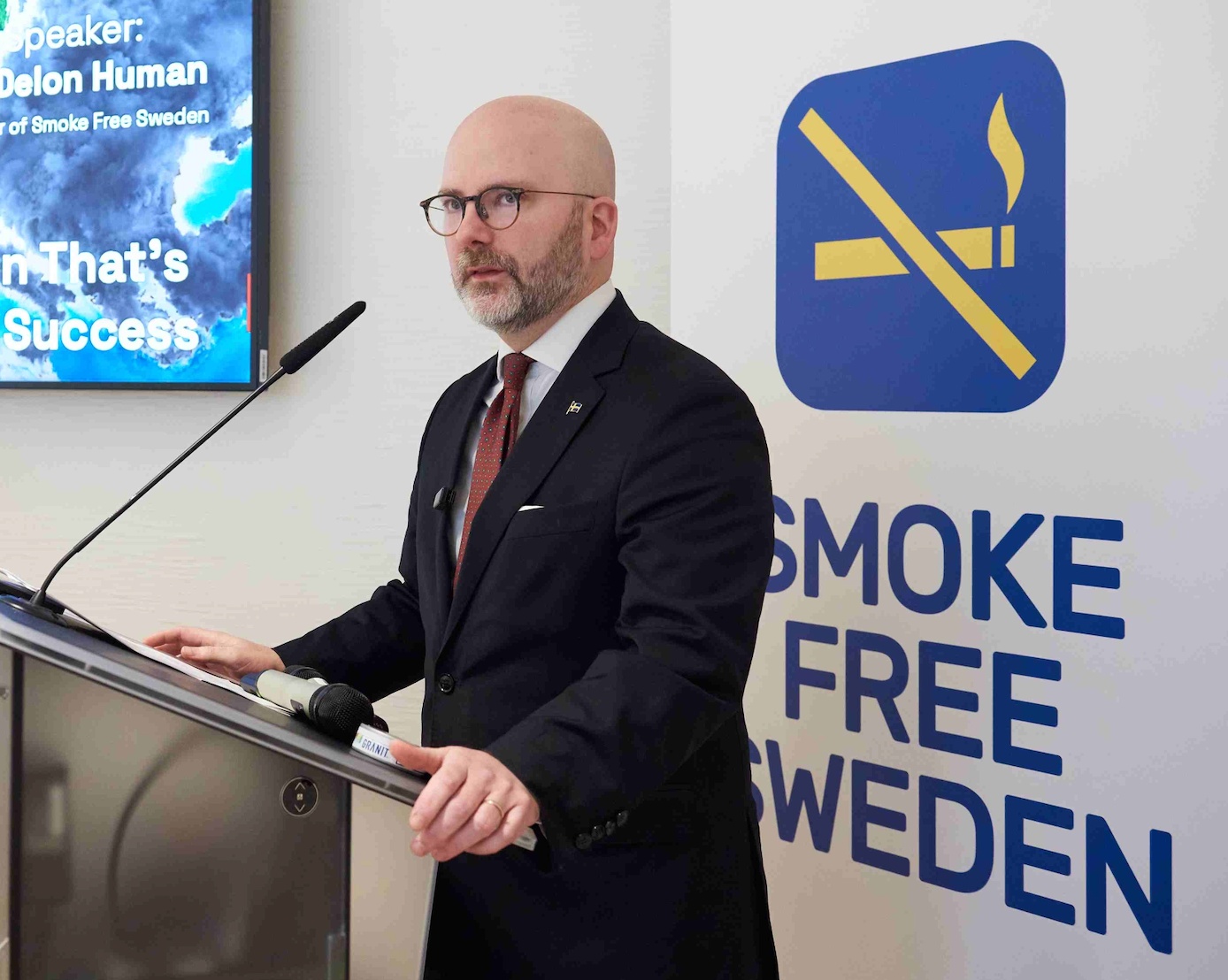 MEP Charlie Weimers (ECR, Sweden), host of the event
That data was reinforced by Swedish findings showing women rank pouches almost three times higher than vapes as their preferred quit-smoking aid and 56% higher than nicotine gum, with switching driven by practicality and perceived lower harm, an insight with implications far beyond Sweden.
Bringing statistics to life, Carissa During, Director of Considerate Pouchers, shared her experience as a former smoker. She explained why pouches succeeded where snus did not: many women prefer something that “doesn’t smell, doesn’t show,” and fits easily into daily life. “If the EU bans pouches, I’ll be forced back to cigarettes”, she warned.
That warning underscored what speakers described as the equity stakes of current policy debates. Her broader plea - give women in other EU countries the same chance - echoed throughout the room.
Hell will freeze over before we accept an EU tax shock on pouches
Audience interventions during the Q&A coalesced around three points: don’t dismiss Sweden’s outcomes, put consumers at the centre, and regulate on comparative risk. Attendees and campaigners called for stronger consumer mobilisation alongside solid science and recalled that Brussels only shifted once ex-smokers spoke up for the alternatives that actually helped them.
Politics came back into view with a brief final intervention from MEP Beatrice Timgren (ECR, Sweden), who contrasted her children’s experience in Stockholm with what they see on the streets of Brussels and Paris: where alternatives are available, there are fewer smokers resulting in public health and fiscal gains.
Threaded through the morning was a policy choice that extends beyond any single product or country. Campaigners’ bottom line - communicate comparative risk clearly, regulate alternatives and measure outcomes - echoed the academic and consumer testimony: people don’t quit because policymakers wish it; they switch when safer options are visible, affordable and trusted. The attendees argued that whether the European Commission and national capitals harden rules or back what works will determine if Sweden’s story becomes Europe’s.
Sign up to The Parliament's weekly newsletter
Every Friday our editorial team goes behind the headlines to offer insight and analysis on the key stories driving the EU agenda. Subscribe for free here.