On Tuesday 12 May at the European Parliament, key legislators, industry leaders and medical experts convened for a high-level discussion organized by HIPRA in partnership with The Parliament , and co-hosted by MEPs Wouter Beke (EPP, Belgium) and Vytenis Andriukaitis (S&D, Lithuania), centred on Chapter II of the Biotech Act - the manufacturing aspects and designation of strategic priority projects.
Europe has long wanted to be a centre for health care innovation - and it has certainly laid the foundations to say it is confidently on its way. With hundreds of innovative mid-cap companies - not least one that developed a recombinant protein COVID-19 vaccine authorised by the European Medicines Agency - hundreds of thousands of skilled workers, world-class regulators, and scientific output that ranks among the best globally, the continent's credentials are real. The remaining question is whether its economic growth can scale with them.
High impact is when patients' lives are saved
This ambition faces a dual pressure: strengthening strategic autonomy and resilience in an increasingly contested geopolitical landscape, while attracting the investment and talent needed to keep Europe's biotech capacity competitive.
If health care innovation is a marathon, Europe is running far behind its competitors. The United States leads the field - its programs BARDA and Operation Warp Speed representing two pillars of a sustained biomanufacturing infrastructure that has invested consistently in vaccines, monoclonal antibodies, and cell and gene therapy. China's pace is harder still: biomanufacturing reached an output of €140 billion over the past five years, and has been named a priority in the government's current five-year plan to 2030.
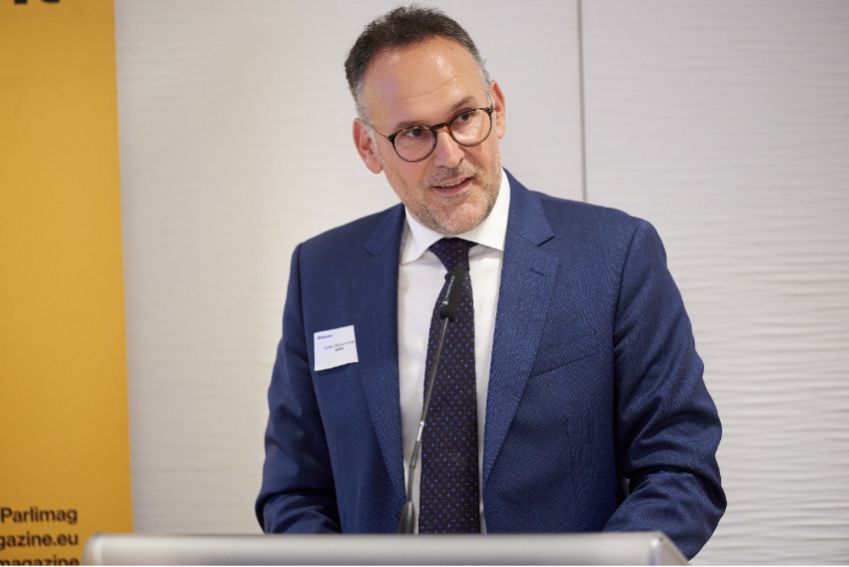 Carles Fàbrega, Managing Director, Human Health, HIPRA
The capital gap is stark. US health-biotech companies attracted €220 billion over the past decade. European companies attracted one-ninth of that - €25 billion. The risk this creates is not abstract: as one speaker noted, Europe lost active pharmaceutical ingredient production to other regions thirty years ago, and has struggled to rebuild it since. The analogy for biologics is pointed - once biomanufacturing capacity leaves, it tends not to come back. That cautionary tale hung over much of the evening's discussion.
A further dimension of urgency was added by the biosimilars wave on the horizon: a major tranche of biologic medicines is set to come off patent in Europe in the coming years. Without sufficient manufacturing capacity at home, Europe risks being poorly positioned to absorb that opportunity - dependent on production decisions made elsewhere for medicines its own patients will need.
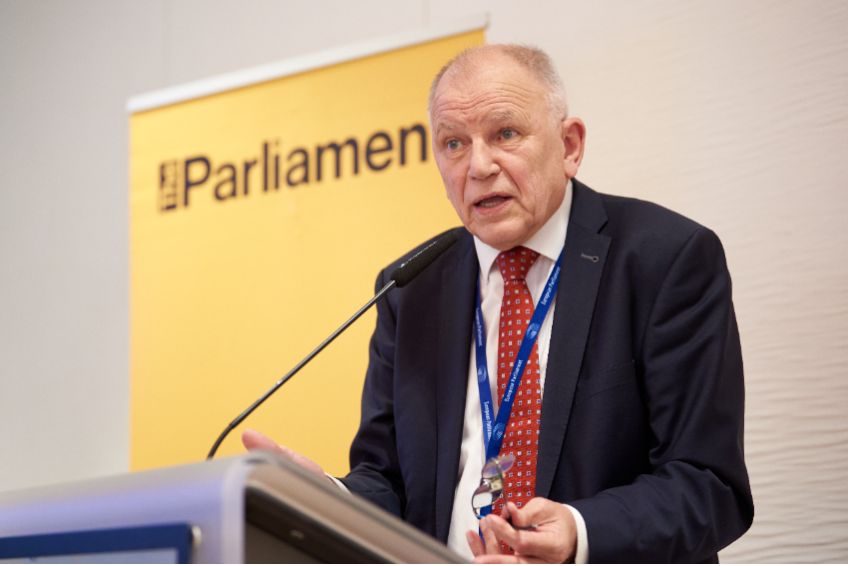 MEP Vytenis Andriukaitis (S&D, Lithuania)
The evening also coincided with a significant moment: earlier that day, a provisional agreement had been reached on the Critical Medicines Act - a development noted with warmth in the room, with MEP Tomislav Sokol saluted for his role as rapporteur.
On the question of strategic autonomy, Florika Fink-Hooijer, Director-General at DG HERA, spoke to the importance of EU FAB - the EU's network for vaccine and therapeutic manufacturing - as a model for the kind of robust, ever-warm manufacturing capacity Europe needs to address future pandemics and biological threats. Keeping that network ready, she argued, is not a cost but a strategic investment. She also offered a note of encouragement: pointing to the rapid and effective mobilisation around the recent Hantavirus outbreak as evidence of how far Europe's preparedness has come since COVID.
We need to anchor innovation in Europe
One of Europe's deepest obstacles to scaling, highlighted repeatedly during the dinner, was fragmentation. "One Europe, One Market!" was a refrain introduced by Andriukaitis in his opening remarks. Together with Thomas Van Cangh, Head of the Biotech Task Force at DG SANTE, he made clear his support for the Biotech Act to take the form of a regulation rather than a directive - ensuring uniform implementation across all 27 member states rather than fragmented national transposition. Andriukaitis went further, calling for Research and Innovation to become the single market's fifth freedom.
Addressing fragmentation is not just about unity - it is about closing the access gap. Andriukaitis illustrated the stakes with a striking example: a medicine can face an average approval wait of 127 days in Germany, compared to 531 in Cyprus. That is more than a year's difference in treatment accessq for EU citizens living under the same flag.
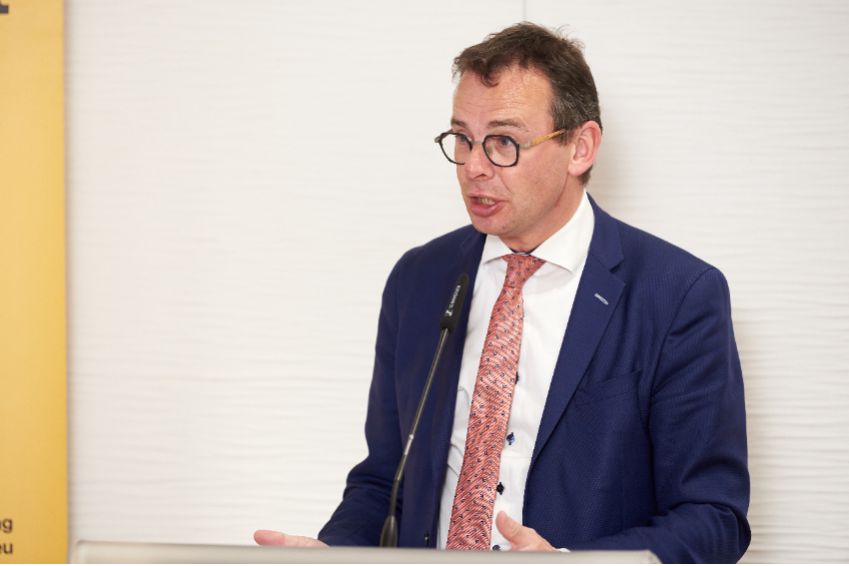 MEP Wouter Beke (EPP, Belgium)
The perspective of smaller member states was echoed by MEPs Paulius Saudargas (EPP, Lithuania) and Inese Vaidere (EPP, Latvia), who both stressed the importance of the Biotech Act being inclusive across the full breadth of the Union. Europe's next biotech breakthrough could come from a smaller member state - or from one of the many mid-cap companies that currently struggle to scale in an environment where access to capital remains limited.
"We need to anchor innovation in Europe," said Frederic Druck, Secretary General of Essenscia, noting that brilliant science too often relocates elsewhere to find the funding it needs.
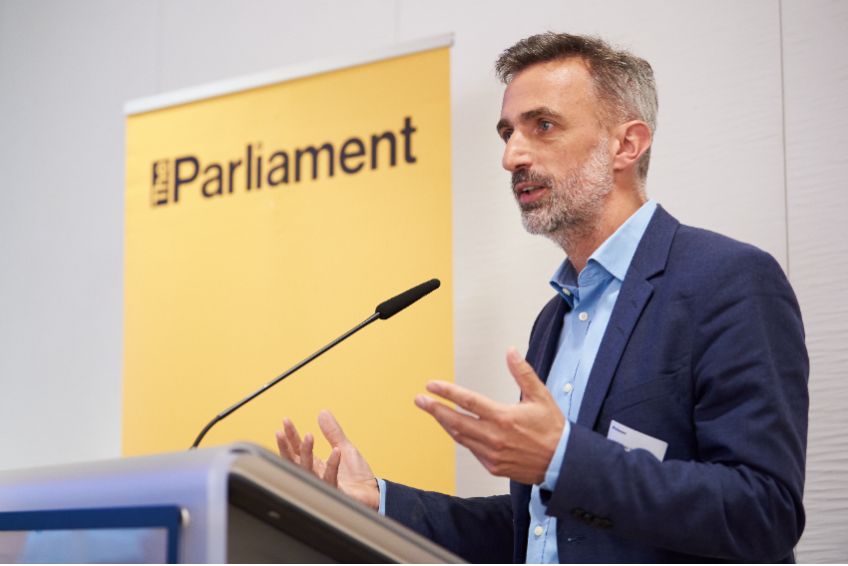 Thomas Van Cangh, Head of Biotech Task Force, DG SANTE
In the Biotech Act, strategic projects and high-impact strategic projects are special designations awarded to biomanufacturing initiatives, unlocking priority regulatory support and easier access to funding. "What does 'high impact' actually mean?" asked Andriukaitis to a room of biotech players eager to answer, to which Van Cangh responded that strategic projects must make a systemic difference, while acknowledging that criteria could be calibrated to bring more players into the market.
Carles Fàbrega, Managing Director of Human Health at HIPRA, put forward three concrete asks from industry: that contract manufacturers be clearly eligible, given that they turn political ambition into real capacity for every member state hosting a facility; that vaccine platform technologies qualify as high-impact, since a platform is infrastructure enabling many future products, not a single one; and that mid-cap manufacturers - the fastest contributors to strategic autonomy on a realistic timeline - qualify alongside the largest players. Andriukaitis then offered his own answer: "High impact is when patients' lives are saved."
How can we prove to patients and citizens that the EU is there for them?
The exchange distilled a genuine balancing act at the heart of the Biotech Act - defining criteria loose enough to bring in smaller companies and member states, and tight enough to preserve the meaning of the designation itself.
At the close of the evening, Beke brought the room back to first principles: "How can we prove to patients and citizens that the EU is there for them?" In the same spirit, Andriukaitis reminded guests of the EU's social model - solidarity first, profit second - and of its capacity to build healthcare systems that put patients at their centre.
Everyone in the room agreed that the Biotech Act reaches its full potential when it combines cutting-edge innovation with industrial competitiveness. But its greatest success will be measured in faster, more equitable access to treatments across all 27 member states. The decisions taken on this Act today will determine what patients can access tomorrow. The risk, ultimately, is not what Europe loses now - it is what it fails to build next.
In partnership with

Sign up to The Parliament's weekly newsletter
Every Friday our editorial team goes behind the headlines to offer insight and analysis on the key stories driving the EU agenda. Subscribe for free here.