On Tuesday, June 2, policymakers, healthcare executives and NGO representatives gathered in the European Parliament for the high-level breakfast discussion on the topic of menopause and how to deliver an effective policy that will combine both equality and competitiveness.
Co-hosted by MEPs Marta Temido (S&D, Portugal) and Romana Jerković (S&D, Croatia) and organised by The Parliament in partnership with Bayer, the discussion explored the far-reaching implications menopause has for the health of European women - and for Europe's economy.
Menopause symptoms are widely recognised - hot flashes, insomnia, brain fog - yet their cumulative economic impact across Europe's workforce remains largely invisible in policy debates. Unmanaged symptoms drive absenteeism, reduced productivity, and early exit from the labour market for women who are often at the peak of their careers.
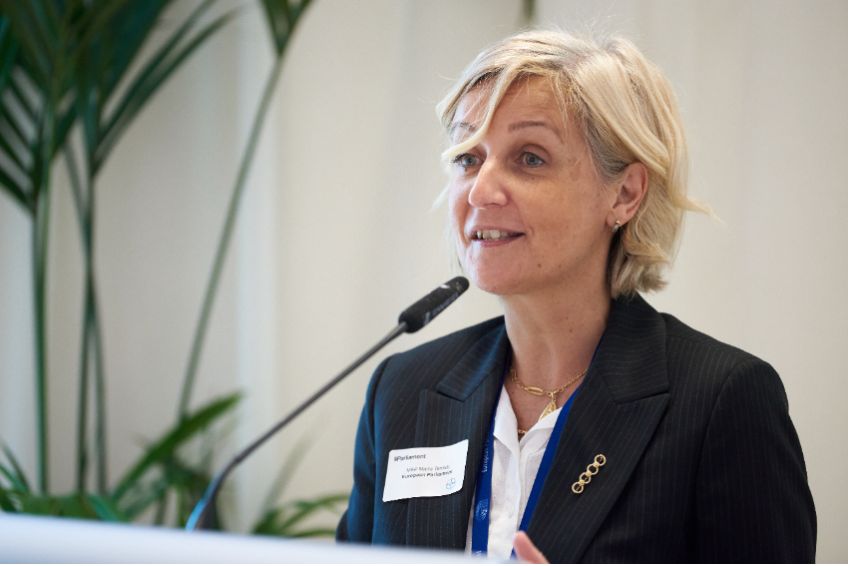 MEP Marta Temido (S&D, Portugal)
The figures are stark. According to research by HWR Berlin, German companies lose €9.5 billion per year due to lack of treatment and support for managing menopause symptoms. In 2023, 25% of German women experiencing menopausal symptoms reduced their working hours or left the workforce due to lack of support, while more than 30% took paid or unpaid sick leave. Peri-menopause and menopause cost the EU27 an estimated €17.3 billion per year. Meanwhile, a working paper by Standford titled "The Menopause Penalty" found that –four years after a menopause-related diagnosis, earnings decline by 7.4% relative to the year before diagnosis, driven by both reduced work hours and early labor market exit. In this sense, the menopause penalty weakens women’s purchasing power and reduces pension contributions at precisely the moment when Europe’s ageing population needs every contribution it can get.
As MEP Romana Jerković, co-host and rapporteur on cardiovascular diseases, put it plainly: "Failure to act is also a policy decision."
Beyond the numbers, the clinical consequences of menopause can be life-threatening. After menopause, the drop in estrogen causes women's cardiovascular risk to catch up to men's - even surpassing it in some age groups. In the first five to seven years post-menopause, women can lose up to 20% of bone mineral density, with resulting fractures carrying a mortality rate of around 20% within the first year alone.
Menopause cannot remain a peripheral topic in health policy
Yet healthcare systems remain largely oriented around reproductive and maternal health - leaving women underserved precisely when their clinical needs intensify. Compounding this, healthcare systems have largely been designed around male biology - a structural problem that runs deeper than training alone, as Ana Carla Pereira, Director for Equality and Non-Discrimination at DG JUST, made clear.
As Jerković observed: "Menopause cannot remain a peripheral topic in health policy." With 10 million more women than men in the EU, this is not a minority issue.
When it comes to breaking the stigma around menopause, four layers of silence were mentioned in having menopause systematically ignored - revealing four distinct gaps policies must address.
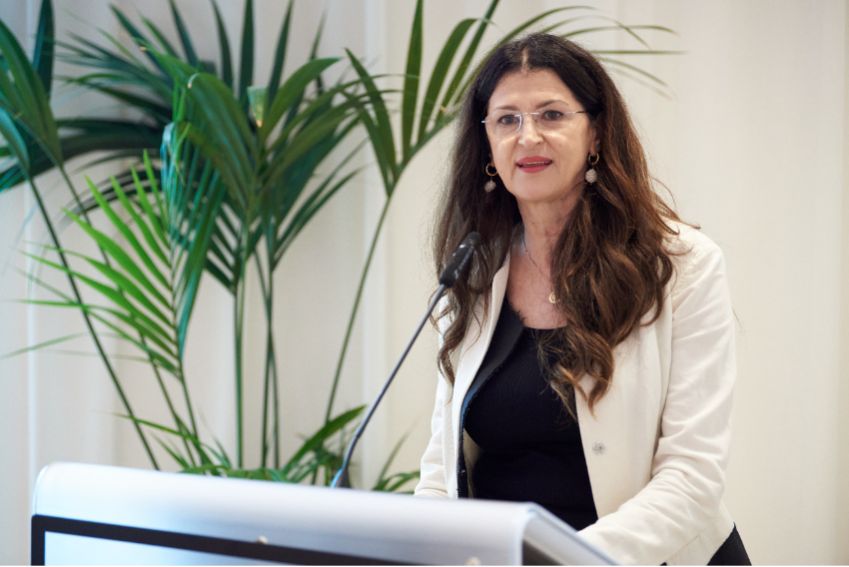 MEP Romana Jerković (S&D, Croatia)
The first is an employer awareness one: according to a study by the University of Ghent, half of women with menopause symptoms say it affects their work life, but only 12% are ready to speak about it since workplace environments actively discourage discussing it. The second is a training one, as women’s health, including menopause, is frequently absent from medical curricula, leading to disparities in treatment despite the clinical consequences of menopause being well-documented.
Thirdly, medicines are still too often developed on the basis of male biology, leaving women's bodies underserved by the very treatments designed to help them. And lastly - a data gap. Women’s experiences with menopause aren’t well-documented in medical systems (like the International Classification of Diseases), meaning that progress cannot be tracked nor measured.
"There has been silence - by women, by practitioners, by HR managers, by policymakers," said Pereira. "It is important to break that silence."
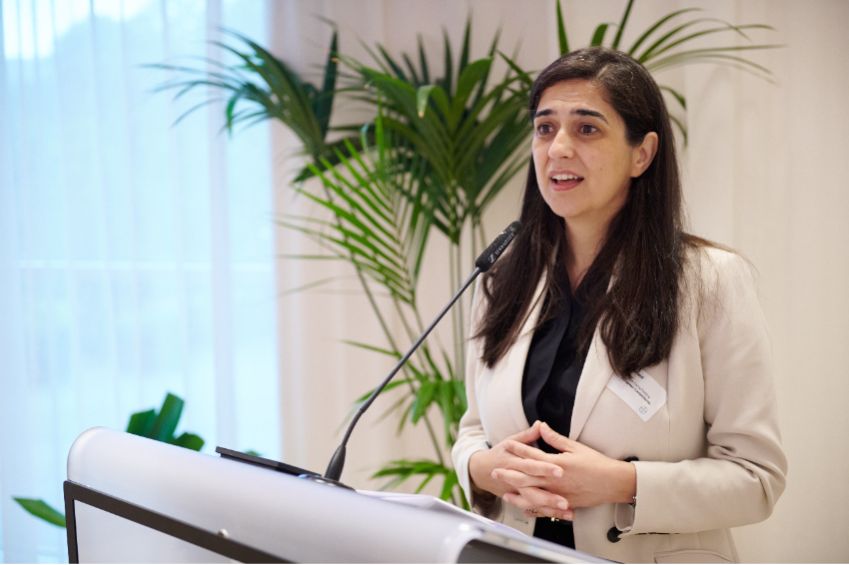 Ana Carla Pereira, Director, Equality and Non-Discrimination, DG JUST
Action is already being taken, and the results are measurable - especially on the industry side.
Since 20222, Bayer has been implementing internal menopause training programs that includes practical workplace adjustments, manager training, the creation of safe spaces like Menopause Cafés, and more. Through regular internal surveys, Bayer is tracking awareness and employee sentiment on menopause, with early results showing that the taboo around the topic is beginning to break down. For Bayer, this is proof that moving from awareness to implementation produces measurable cultural change - not just for individuals, but for the workforce as a whole.
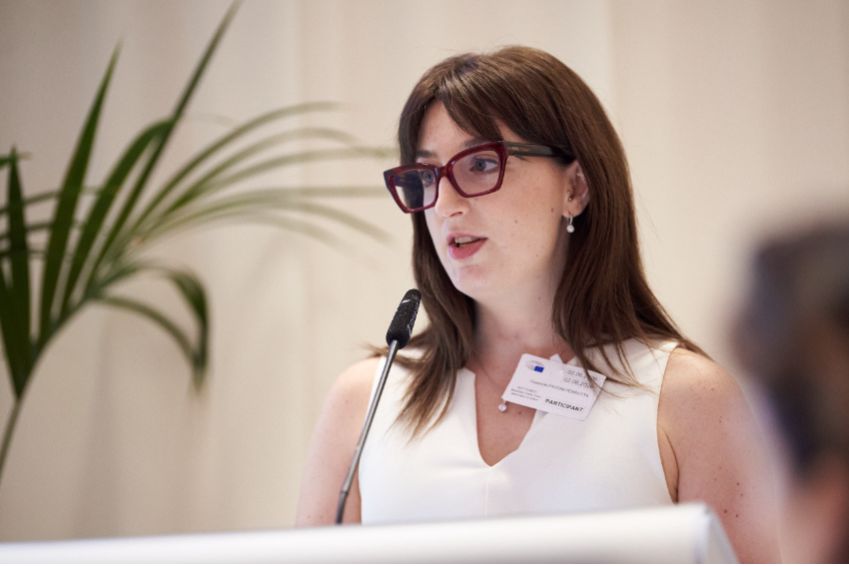 Florencia Pavoni Perrotta, Global Pharma Public Affairs, Bayer
As Florencia Pavoni Perrotta, Global Pharma Public Affairs of Bayer, noted: “Menopause is a universal, natural and predictable life transition. Yet too often companies lose skilled female workers because workplaces are not designed to support them. We welcome the growing private-sector engagement on this issue and call on more employers to lead the transformation of workplace policies that help women thrive throughout their careers.”
However, efforts from the private sector alone won’t be sufficient. “A woman’s support should not depend on where she works, or which member state she lives in”, stated Perrotta, highlighting a frequent problem of EU health policy: fragmentation across its member states.
Failure to act is also a policy decision
The European Commission’s answer to this lies in the Gender Equality Strategy, its overarching framework for advancing gender equality across the EU. Ms. Pereira noted that the strategy would place women’s health at the centre of EU policy debates - a meaningful step, despite not being a strategy exclusive to women's health - or a binding one.A challenge to the Commission’s ongoing efforts was presented by MEP Lina Gálvez (S&D, Spain), who closed out the event with a powerful speech. Ms. Gálvez announced that the European Parliament’s Women’s Rights and Gender Equality Committee (FEMM) - which she chairs - would produce the first-ever Parliament report on menopause, an independent Initiative Report currently being finalized.
Galvez also took the opportunity to shed light on the budgeting reality of women’s health policy - stating that “unless we advance on gender budgeting, we will not advance on political priorities”.
 MEP Lina Gálvez (S&D, Spain)
This event achieved exactly what it set out to: bringing a life stage that affects over half the population out of the shadows and onto the policy agenda. Menopause is not a lifestyle issue. Its clinical consequences are serious, its economic costs are measurable, and the women experiencing it are at the peak of their value to Europe's workforce and society. Awareness has arrived at the table. Now it needs a budget, a strategy, and action to match.
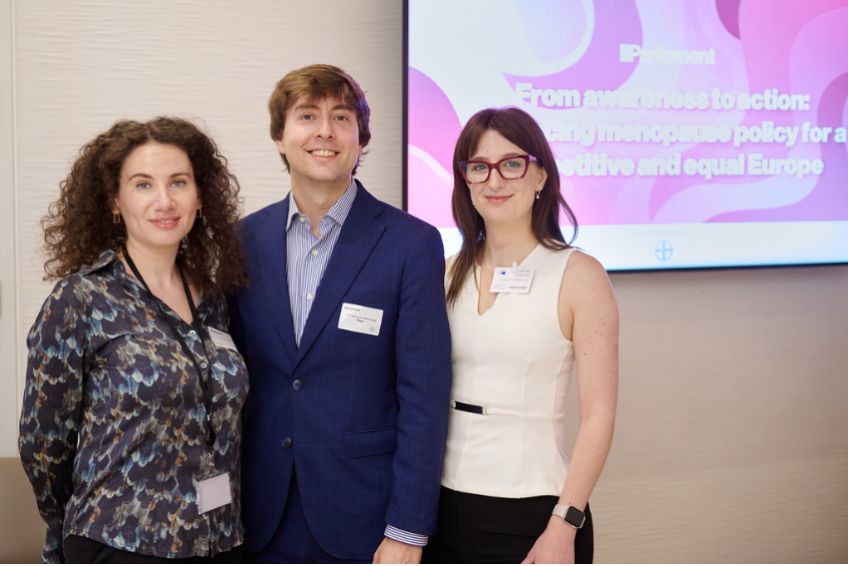
EU women’s health policy is entering a decisive moment: menopause is moving from a “private” health issue into a recognized policy priority that cuts across equality, workforce participation and health-system performance. As EU institutions start to reference menopause in core strategies and debates, there is a window to secure better data, stronger clinical guidance and more equitable access to care across Member States. Advocating now is critical, because the choices Europe makes on the topic will determine whether this momentum translates into real improvements for women living through menopause
Desislava Ekzarova, Manager Health & Digital Policies, EU Public Affairs, Bayer, and Axel Balog de Manko Bück, EU Parliament Relations and EU Industry Policy, Bayer
In partnership with

Sign up to The Parliament's weekly newsletter
Every Friday our editorial team goes behind the headlines to offer insight and analysis on the key stories driving the EU agenda. Subscribe for free here.