On Wednesday, May 6, at the European Parliament in Brussels, high-level policymakers and industry leaders gathered at an event held by Liquid Gas Europe in partnership with The Parliament. The two-panel event co-hosted by MEPs Seán Kelly (EPP, Ireland) and Pietro Fiocchi (ECR, Italy) explored the potential of rLGs against a backdrop of two converging pressures: an energy transition in need of acceleration, and renewed urgency around energy security.
Liquid Gas Europe General Manager Ewa Abramiuk-Lété set the tone with a clear message: “Europe's energy transition will not succeed on ambition alone." The potential of renewable liquid gases (rLGs), such as bioLPG and renewable DME, was clearly established throughout Abramiuk-Lété’s opening presentation.
Indeed, liquid gases and renewable liquid gases are already powering 7 million households and 8,5 million vehicles across Europe. If scaled successfully, production of rLGs could reach27.4 million tonnes by 2050, enough to replace all current conventional liquid gas demand with minimal or no modification to existing infrastructure The hurdle is clear: “We don’t have a technology gap. We have a policy gap.”
 Ewa Abramiuk Lété
General Manager of Liquid Gas Europe
Moderator Antonia Zimmermann noted that any discussion of rLGs must account for rural communities - around 137 million Europeans, representing 30% of the continent's population - where energy choices are most limited.
Goher-Ur-Rehman Mir, Head of Global Sustainable Fuels Policy at SHV Energy, highlighted the potential cost of electrification retrofitting for a rural home – which, in some cases, could cost up to €70,000 for deep renovation and full electrification. But with a more affordable installation of a simple gas boiler running on bioLPG, a home can produce decarbonised energy immediately.
It’s not just homes, either. Farm machinery production in Ireland was cited as another example - a process operating at above 200°C, beyond the reach of heat pumps, where a blend of bioLPG and LPG offered a viable path toward climate neutrality.
Europe's energy transition will not succeed on ambition alone
MEP Seán Kelly underlined not just the impact, but also the practicality of using rLGs in rural communities - and ended with a call for the transition to be more inclusive: “Do we want everybody to be part of the transition? Or do we want only those who are building a new house?”
The electrification of Europe’s energy grid was mentioned as a solution to Europe’s energy transition - but not as a silver bullet, due to the cost of its scaling and constraints on the ground. “We are embarking upon a huge process of electrification, and we believe it’s the right thing to do. But I’m not sure we have fully appreciated the scale of what we are undertaking, given the cost, time and effort involved”, said Graham Green, Commercial & Policy Manager for rLGs at DCC Energy.
Beyond the cost lies the challenge of capacity. Green pointed out that if electrification were to compensate for the 10 million tonnes of LPG the EU consumes annually for heating purposes, 100 TWh of additional power as well as 20 GW of firm generation capacity would be required - representing about 4% of current electricity consumption in the EU - a transition that, according to analysis by Frontier Economics, could cost €11–56 billion depending on the generation mix.
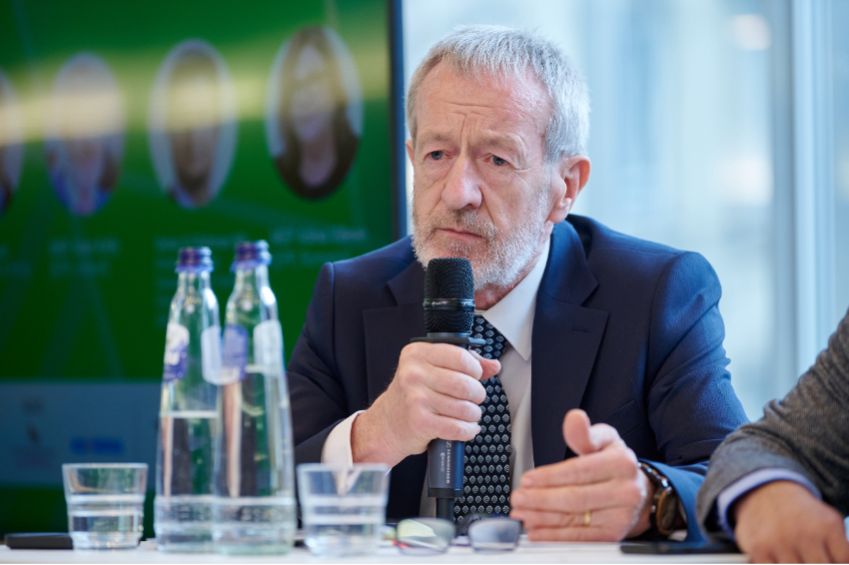 MEP Seán Kelly (EPP, Ireland)
Use of renewable liquid gases, proponents argued, could reduce or eliminate that investment requirement.
Speakers agreed on the potential of rLGs in the energy transition, and several different points were highlighted when it came to the policy frameworks needed to support them.
For Green, “the key to this equation is to introduce a Renewable Heating Obligation, modelled on transport fuel obligations” to the Renewable Energy Directive (RED), creating firm and predictable future demand for renewable liquid gases and attracting more investment. MEP Adina-Ioana Vălean (EPP, Romania), a former European Commissioner for Transport, observed that current RED policies were “developed in silos” and stressed the need for policies to be horizontally integrated to avoid confusion and ensure all options available are recognised.
Monica Di Pinti, Public Affairs Director at the Association of European Heating Industry (EHI), expressed the risks of reopening existing legislation: “We need to keep the good things that were done with the Fit for 55 package. We need to provide regulatory stability in Europe”.
We don’t have a technology gap. We have a policy gap
The discussion reflected a growing recognition across Europe’s energy debate that ambitious climate targets must be supported by practical implementation pathways and stable, investment-friendly legislation.
This perspective continued into the second panel of the day, which focused on CO₂ standards for cars and vans.
MEP Jan-Christoph Oetjen (Renew Europe, Germany), opened with a blunt assessment: true technological neutrality does not exist in the current regulation. For Oetjen, more flexibility is needed to reach Europe’s decarbonization targets, and that means including alternative fuels. His proposed solution is straightforward : “I want to use the power of the market.”
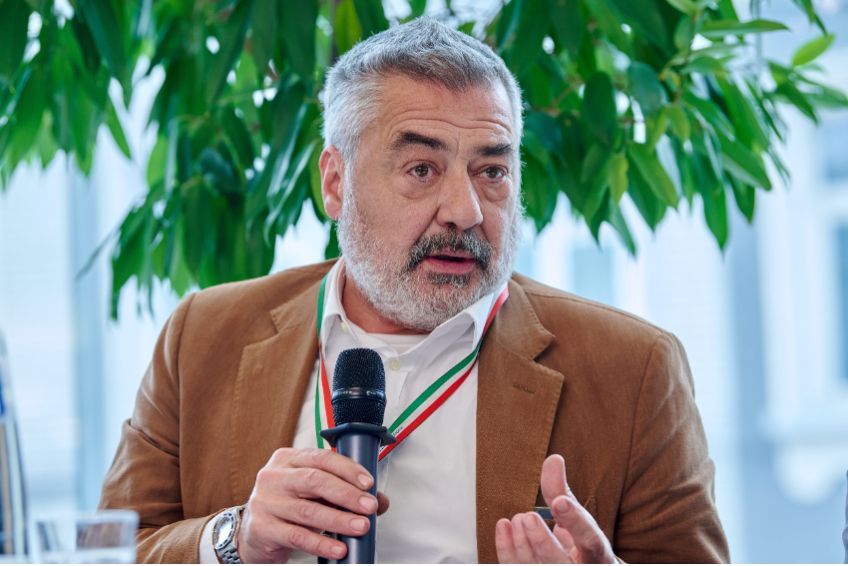 MEP Pietro Fiocchi (ECR, Italy)
And when it comes to supply, the industry is ready. “We are already producing 100% renewable fuels”, stated Ana Álvarez Rodríguez, Repsol’s Head of EU Affairs & Brussels Office. The disconnect between supply and certainty of future demand isn’t industrial: it’s regulatory.
Others stressed more urgency when it came to reviewing the CO₂ standards directive. For Marco Seimandi, Vice President of Sales & Marketing at Westport Fuel Systems, the industry is “waiting anxiously” for this review, as the next milestone - 2030 - is “tomorrow morning”.
Consensus in the room on the potential of rLGs was clear: the technology is ready, as is the infrastructure. The challenge now is stimulating demand for this energy source, which could power rural communities and their industries, ease the burden on an overstretched electrical grid, and play a meaningful role in decarbonising European transport.
With this in mind, two policy moments will be on the agendas of energy policy professionals in Brussels: the upcoming revision of the Renewable Energy Directive (RED IV, expected by the end of 2026), and the CO₂ standards review. Both of these need to fully recognise the potential of renewable liquids gases to decarbonise heating and mobility and to take steps to support their deployment at scale.
As Liquid Gas Europe made clear from the outset, Europe's energy transition won't succeed on ambition alone. It needs a coherent policy framework to make space for alternative renewable fuels as well.
Sign up to The Parliament's weekly newsletter
Every Friday our editorial team goes behind the headlines to offer insight and analysis on the key stories driving the EU agenda. Subscribe for free here.