At a recent event, held in the European Parliament in Brussels, APPLiA brought together policymakers and industry leaders to discuss the future of Europe’s home appliance sector, which is a core part of life, found throughout households across Europe. However, the sector that produces those everyday devices rarely features in Europe’s wider industrial debates.
Introducing the discussion, host MEP Radan Kanev (EPP, Bulgaria), highlighted that the sector did not always receive the attention it warrants.
“There is a limited number of industrial sectors whose voice is strongly heard,” the Bulgarian MEP said. “Regretfully, the home appliance industry is not one of them.”
That absence is difficult to justify. The home appliance industry connects manufacturing, energy use, and the circular economy in ways few others do. The question is whether the industry can survive in a rapidly changing operating environment where overseas competitors are benefiting from lower energy prices and more flexible regulatory regimes. This, the event heard, is creating a perfect storm that potentially threatens an acknowledged European success story.
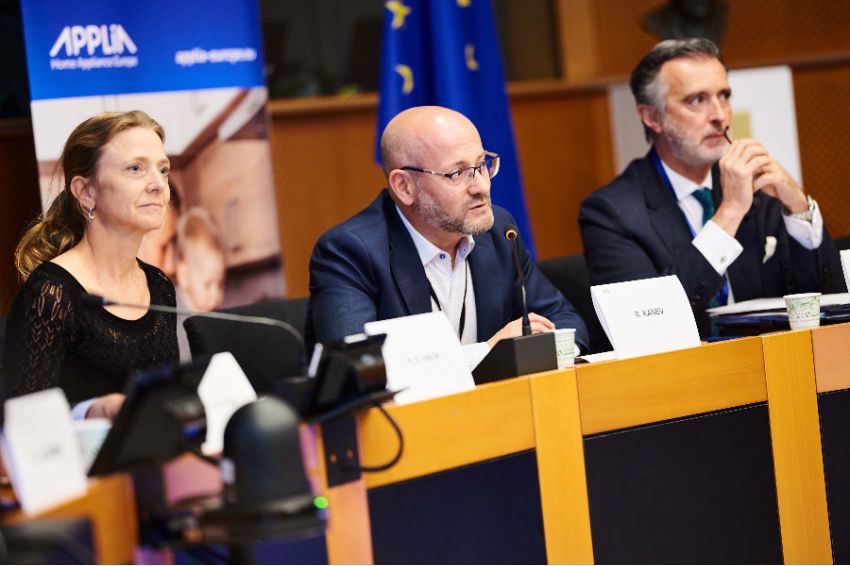 MEP Radan Kanev (EPP, Bulgaria)
“The question is whether Europe is willing to continue making things,” Paolo Falcioni, Director General of industry trade body APPLiA, told attendees. “Or whether it will become a place that only imports things manufactured elsewhere.”
The event heard that Europe has rightly built an ambitious framework around sustainability, circularity, and consumer protection, but that the industrial base needed to deliver those goals is increasingly under strain.
“Nobody can be a consumer without a job, without a salary, without money,” Fabio De’Longhi, CEO of the De’Longhi Group, explained. “If we talk about sustainability without keeping industry in the picture, we may have no consumers in Europe.”
One problem highlighted is that while rules covering efficiency and recyclability apply to all products wherever they are made, the industrial environment that manufacturers operate within differs significantly. That creates an additional set of challenges and costs for businesses based within the EU.
Irene Pastorino is Deputy Coordinator at Italy’s Permanent Representation. She echoed Falcioni’s concerns and called for a policy response that begins to address the growing pressures that manufacturers face.
There is a limited number of industrial sectors whose voice is strongly heard. Regretfully, the home appliance industry is not one of them
“We need to ensure a level playing field and reduce those barriers by reducing complexity,” she said. “We need to simplify the regulatory framework, strengthen the Single Market, reduce energy prices and production costs, and also secure the supply of critical raw materials.”
But Ana Xavier of the European Commission drew attention to the fact that competition is often asymmetric. She suggested policymakers needed to be clear on which levers have the biggest impact.
“We need to distinguish between fair and unfair competition,” she said. “Different problems require different policy responses.”
What all speakers agreed upon is that if Europe gets this wrong, then the consequences will be widely felt. Falcioni recounted a recent visit he made to a Slovenian factory, typical of many in the industry.
“If we do not do something, then the 5,000 workers in that factory will simply disappear,” he warned. “But along with them will disappear all of that know-how.”
That know-how is currently spread across Europe, with the sector supporting around one million jobs across 130 factories. That scale is a key asset, but interdependencies in the value chain mean that if one part of it is lost, then the whole becomes harder to sustain.
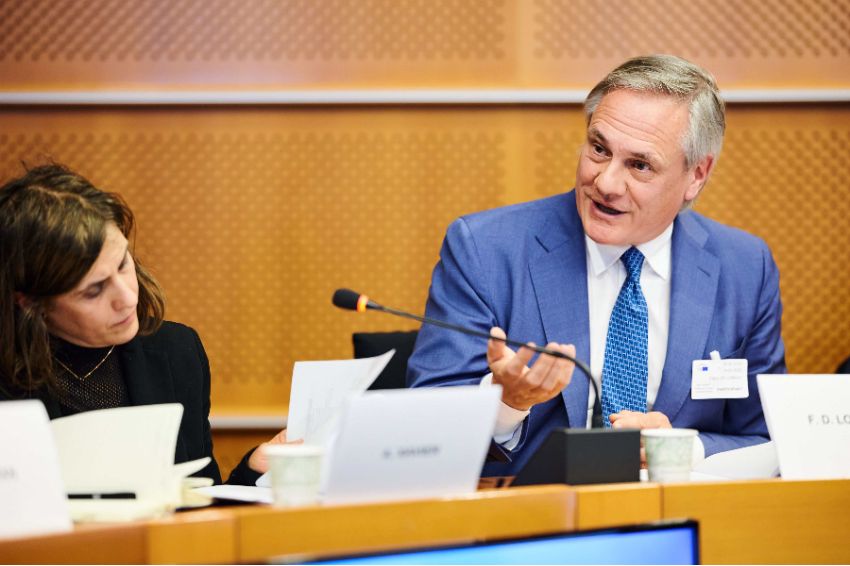 Fabio De’ Longhi, CEO & President of De’ Longhi Group
This point about interconnectedness was echoed by Adolfo Aiello of EUROFER, who issued a plea for policymakers to adopt a whole system approach to the industry.
“Of course, if we are protected in Europe as makers, but our clients are not competitive, then our protection makes little sense,” he observed.
Paulina Dejmek Hack, Head of Cabinet to Commissioner Jessika Roswall, argued that the focus needs to shift from seeing circularity as a purely environmental issue. She reminded the event that keeping materials in use is not just about reducing emissions.
“If we can shift our business model to become more circular, that is good for the environment,” she said, “But I would also add resilience, independence, strategic autonomy, and security.”
Turning that ambition into practice remains uneven. The circular economy depends on flows, but many businesses believe that those flows are still constrained.
If we talk about sustainability without keeping industry in the picture, we may have no consumers in Europe
“Many of the obstacles we see today are classic Single Market obstacles,” Dejmek Hack said. “Companies say, ‘We know there are firms that could use this by-product, but it is too complicated.’ So, we simply do not do it.”
Another potential barrier to delivering a truly circular economy was identified by Maria Vera Duran of Recycling Europe. She reminded attendees that focusing only on ensuring a ready supply of recycled materials was only part of the picture.
“If there is no demand for recycled materials, we will never achieve a higher recycling rate,” she said. “If we want to recover critical raw materials, but if there is no production in the EU, what do we do with these materials?”
For the Commission, closing that loop will require a shift in incentives. It also requires a broader view of competitiveness. “We should think less in terms of ‘this sector is strategic’ and instead ask what conditions allow all industries to thrive,” Xavier said.
That decision will not be made in a single act. It will emerge through dialogue between policymakers and manufacturers on the ground.
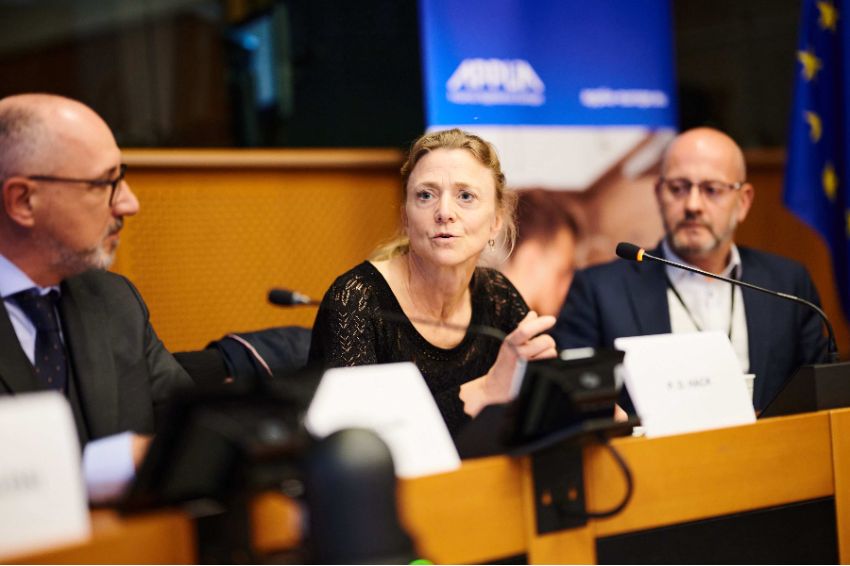 Jessika Dejmek Hack, Head of Cabinet for Commissioner Jessika Roswall
“Almost every cost line that the appliance industry has to bear today is higher than it needs to be because of the European Union’s lack of attention to competitiveness,” Portuguese MEP João Cotrim de Figueiredo argued. “Politicians need to do much better at removing everything that makes producing appliances in Europe more expensive.”
The home appliance sector may not be the largest part of Europe’s economy. It is, however, a test case for finding the right balance between sustainability and competitiveness. If industrial policy works for this vital part of Europe’s manufacturing sector, then it is likely to benefit others too.
Sign up to The Parliament's weekly newsletter
Every Friday our editorial team goes behind the headlines to offer insight and analysis on the key stories driving the EU agenda. Subscribe for free here.