At The Parliament’s European Industry Forum 2026, policymakers, industry leaders, and experts explored how the EU can strengthen competitiveness while reducing critical dependencies in an uncertain world.
Europe's industrial debate was once framed primarily around growth, productivity, and the green transition. However, discussions about the continent's industrial future are now equally shaped by concerns over resilience, security, and strategic autonomy.
That important shift was the central theme of this year’s European Industry Forum, where speakers argued that Europe's challenge is no longer simply to become more competitive. It is to reduce strategic dependencies without abandoning the openness that has long underpinned Europe’s prosperity.
We have to make sure that there is more production here in Europe on what really counts
That challenge was laid out at the start of the day by Bertrand L'Huillier, Head of Cabinet to Executive Vice-President Stéphane Séjourné. He warned that European industry is increasingly buffeted by external pressures such as tariffs and unfair competition. Those pressures, L’Huillier argued, are damaging the continent’s industrial base.
"Every month, we are losing 20,000 industrial jobs, in particular in our energy-intensive industries,” he told the event. "We have to make sure that there is more production here in Europe on what really counts - clean tech, digital tech, biotechnologies, defence, security, and critical materials."
The discussion quickly moved beyond competitiveness alone and on to the broader question of how Europe can remain open while reducing its exposure to geopolitical and economic shocks.
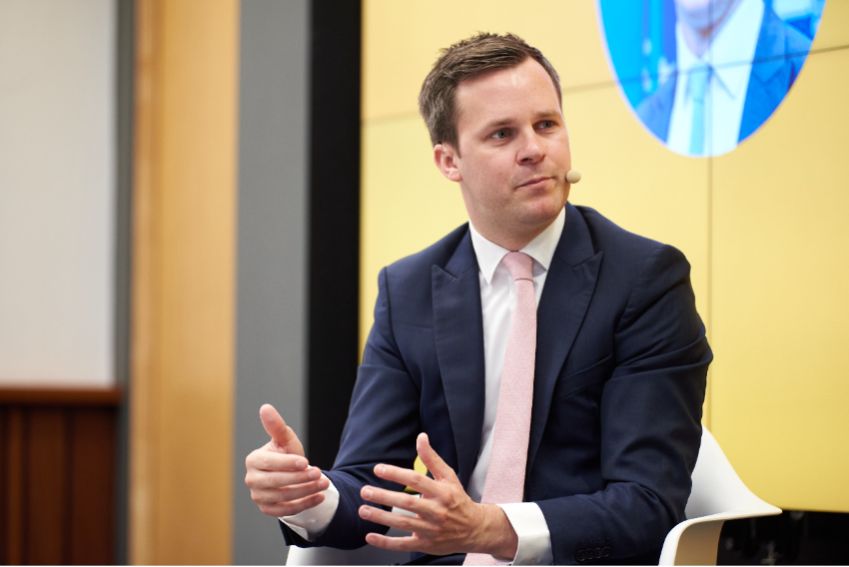 Bertrand L’Huillier Head of Cabinet of European Commission Executive Vice President Stéphane Séjourné
MEP Bruno Tobback pointed to China's long-term industrial strategy as an example of the challenge Europe faces from its competitors.
"China has been a lot more strategically coherent in its policy. They have built their value chain from top to bottom," Tobback observed, noting that in Europe, supply, demand, and manufacturing capacity were not always in full alignment. "Producing copper, recycling copper just to sell it to the Chinese does not strike me as a very smart future industrial strategy for Europe."
MEP Martine Kemp expanded Tobback’s point, arguing that Europe must discover a new pragmatism if it is to respond successfully to global challenges.
The objective is to have investors in Europe
"Diversification is the keyword," she said. " We were too reliant on some partners, and we forgot a little bit about some others. In the political situation we are in, we have become more open to finding new partners, new pathways, and new ways to operate.”
That plea for pragmatism when it comes to trade was echoed by Swedish MEP Jörgen Warborn, who was the Rapporteur for the Sustainability Omnibus package. He reminded attendees that while recently negotiated agreements may not be perfect, they need to be judged within a radically different operating context.
"The alternative would not be the status quo," he explained. "It would be higher tariffs and a trade war with the US at a time when we have a proper war on European soil."
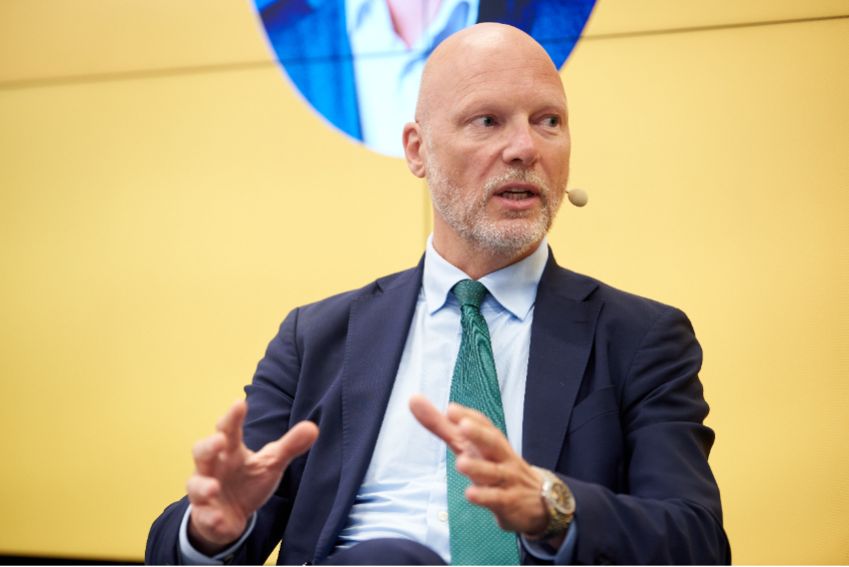 MEP Jörgen Warborn (EPP, Sweden), Rapporteur for the Sustainability Omnibus
MEP Warborn also linked competitiveness to the energy challenge highlighted by a host of other speakers. MEP Thomas Pellerin-Carlin agreed, arguing that one of Europe's greatest vulnerabilities remains its dependence on others to meet its energy needs.
"Almost half of the energy we consume in Europe is oil. Do you know how much oil we produce in Europe?” he asked. “Three per cent of what we consume. "It is insane that Europe keeps depending on oil," he continued. "How will we deter Russia if we don't even have enough oil storage to provide fuel for our military? We are sleepwalking into disaster."
Pellerin-Carlin's warning reflected a broader theme running through the event. Whether discussing energy, raw materials, technology, or defence, speakers repeatedly returned to the risks created when Europe becomes dependent on supply chains it does not control.
China has been a lot more strategically coherent in its policy. They have built their value chain from top to bottom
It was a point picked up by European Commissioner for Defence and Space, Andrius Kubilius, who argued that Europe must focus not only on spending more on defence, but also on building the industrial capacity required to support security in the long-term.
"Fragmentation is one of the big issues. We do not have a single market in defence, and that is a very big strategic problem," Kubilius told the event. “We need to see three pillars of defence readiness - material readiness, institutional readiness, and political readiness."
That broader concept of preparedness was also highlighted by General Seán Clancy, Chair of the European Union Military Committee.
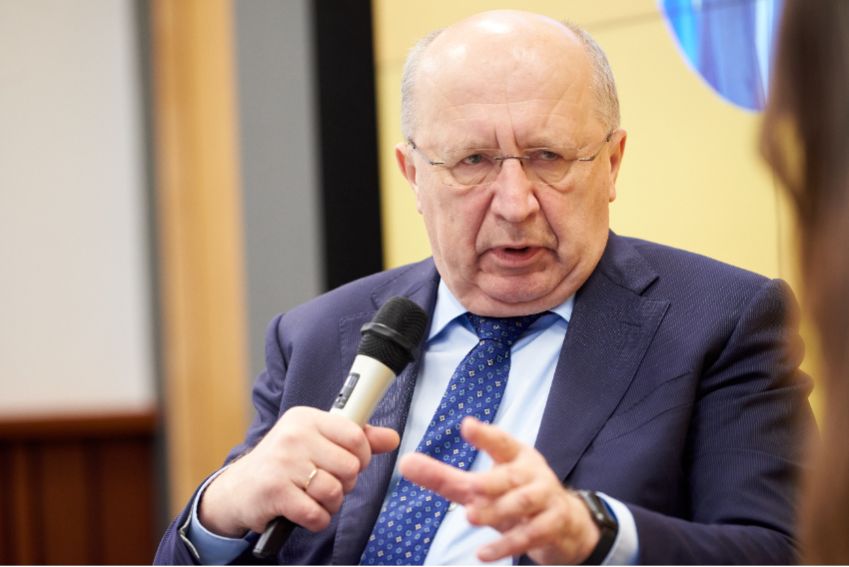 Andrius Kubilius, European Commissioner for Defence and Space
"What the war in Ukraine has done is bring a really strong focus to the prioritisation of security and defence," he said. "But what it has also elucidated is the fact that we were not prepared. If readiness is truly to be achieved, it will require a whole-of-society approach not only to resilience, but to readiness."
MEP Lucia Annunziata reminded the event that preparedness cannot be achieved without political consent. She cautioned that, despite some progress, such a political consensus was not yet fully in place.
"We have a political problem. We do not have the full support of every member state to enter this phase," she told attendees.
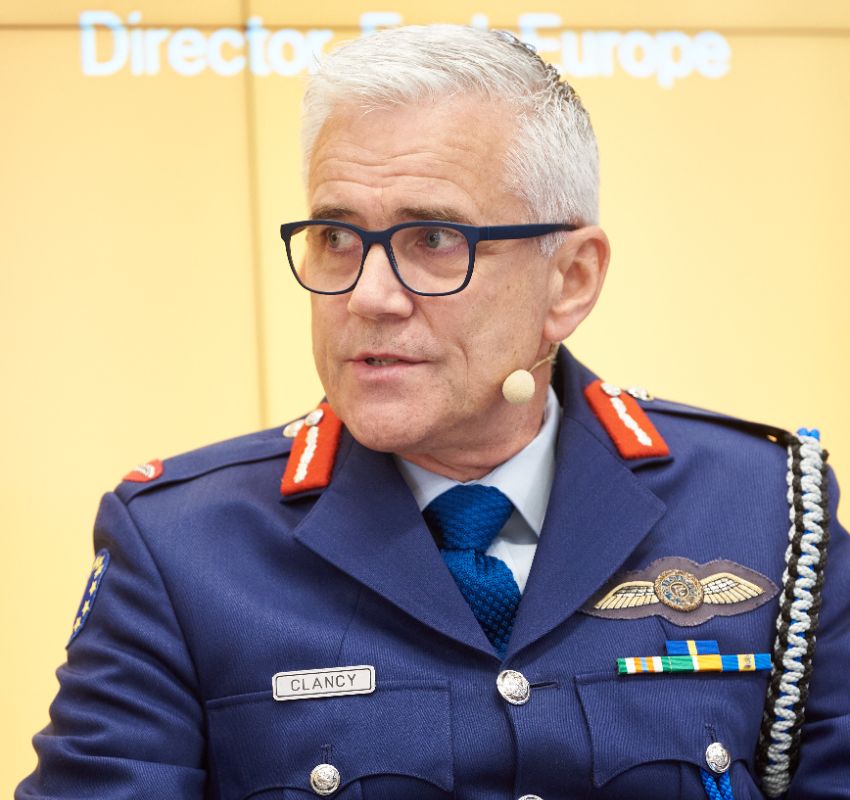 General Seán Clancy, Chair European of the Union Military Committee
MEP Christophe Grudler argued that the ultimate test of any policy is whether Europe can translate strategy into investment. For Grudler, the objective is not protectionism but ensuring that public policy delivers tangible economic benefits.
"The objective is to have investors in Europe," he said. "To put money in Europe, to have jobs in Europe, to find joint ventures with European companies, and to put innovation in Europe.”
Although approaching the issues from different directions, the speakers at this year's Forum repeatedly returned to the same underlying challenge - how Europe can reduce its strategic dependencies without retreating from the openness that underpins its prosperity. The answer lies beyond competitiveness alone. It also demands industrial capacity, societal resilience, and political will.
Sign up to The Parliament's weekly newsletter
Every Friday our editorial team goes behind the headlines to offer insight and analysis on the key stories driving the EU agenda. Subscribe for free here.