On the Athenian coastline, a long-abandoned airport site is being reimagined as one of Europe’s most ambitious urban transformations.
The Ellinikon – a 15-minute, climate-resilient district designed to integrate housing, public spaces, leisure, infrastructure and nature into a single system – is one of the most ambitious redevelopment projects taking place across the continent. But could it prove a test case for how European cities can regenerate at scale while embedding sustainability, resilience and quality of life from the outset?
That ambition formed the basis of a recent discussion in the European Parliament, where policymakers and practitioners examined what such models mean in practice — and how they can be replicated across Europe.
MEP Dimitris Tsiodras (EPP, Greece), who hosted the event, welcomed the project’s ambition to create a “smart, green, and human-centric ecosystem, while being conceived as one of Europe's first fully realized 15-minute cities”.
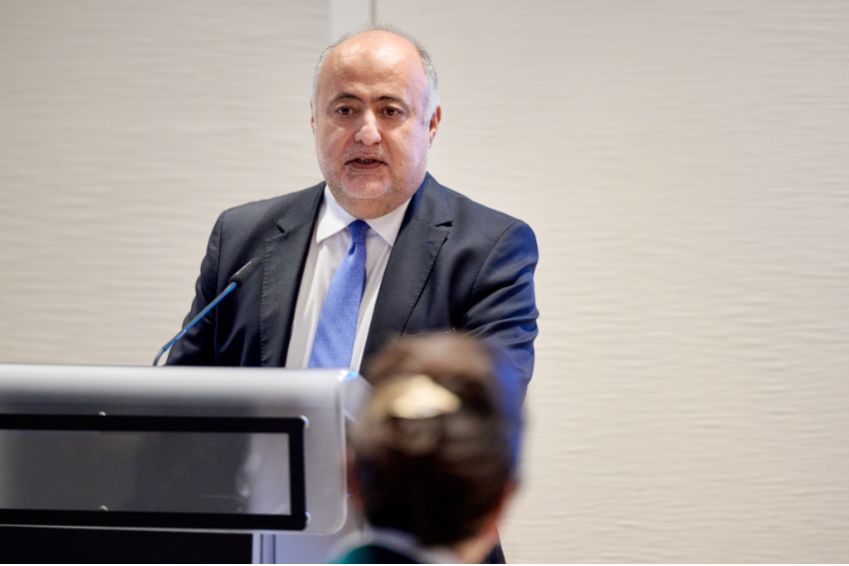 MEP Dimitris Tsiodras (EPP, Greece)
“The cities of tomorrow must be designed as complete ecosystems and must combine technological innovation with environmental sustainability and economic opportunity,” Tsiodras said.
For Tsiodras, the challenge is not simply renewal, but continuity. “Europe’s urban landscape is defined by its history, culture, and architectural heritage. The challenge is not to replace their identity, but to enhance it,” he said, pointing to other cities such as Barcelona and Vienna as examples of how innovation can be integrated into existing environments.
The cities of tomorrow must be designed as complete ecosystems
The Ellinikon, he argued, represents that balance in practice — “bridging the past with the future by preserving buildings of historical significance and highlighting archaeological locations” while embedding new systems for sustainability and liveability.
Presented by Theodoros Gavriilidis, Chief Investment Officer at LAMDA Development (the master developer of The Ellinikon), the project is framed not just as redevelopment, but as a full reconfiguration of urban life. Built on a long-abandoned and environmentally degraded site, The Ellinikon is being designed as a climate-resilient, data-driven, “city-within-a-city” on the Athenian coastline, combining residential areas, education, health, leisure, and Europe’s largest coastal park into a single integrated system .
“Developing a city from scratch helps very much to incorporate all the technologies of sustainability you want from the beginning,” Gavriilidis said, emphasising the advantage of designing systems – from energy to mobility to water – at the outset rather than retrofitting them later.
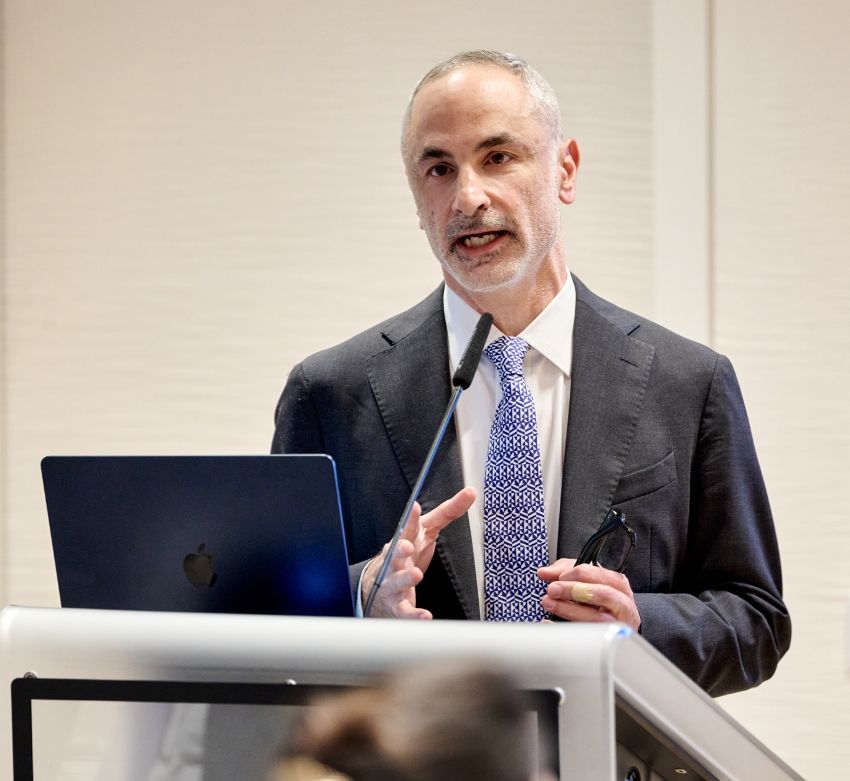 Theodoros Gavriilidis, Chief Investment Officer, LAMDA Development
This approach runs through the project’s design. Water use, for example, is structured around circular principles, with a majority irrigated from recycled water, Gavriilidis noted. Digital infrastructure is also embedded to manage energy, mobility and services in real time, with the aim of improving efficiency and everyday experience.
The emphasis is not only environmental, but human. Gavriilidis highlighted the prioritisation of education, sport and health facilities across the site, alongside accessible public space and inclusive design. “The Ellinikon has a lot of public benefit areas. The Ellinikon is designed and developed to be accessible to all, including people with disabilities," he said.
Taken together, the ambition is to create what the project’s backers describe as a “people-first”, climate-positive urban model – one aligned with broader European priorities around resilience, circularity and quality of life .
Inclusion must be designed, not promised
The question, however, is how far such models can travel.
The European Commission estimates that Europe faces a structural housing gap of 650,000 homes, alongside significant investment needs and capacity constraints. In that context, large-scale regeneration projects are increasingly seen as part of the solution – but also raise questions about delivery and replication.
“Europe cannot treat these projects as isolated showcases: they have to connect to real housing delivery,” said Matthew Baldwin, Deputy Director-General at the Commission’s Directorate-General for Energy, shifting the discussion from vision to implementation.
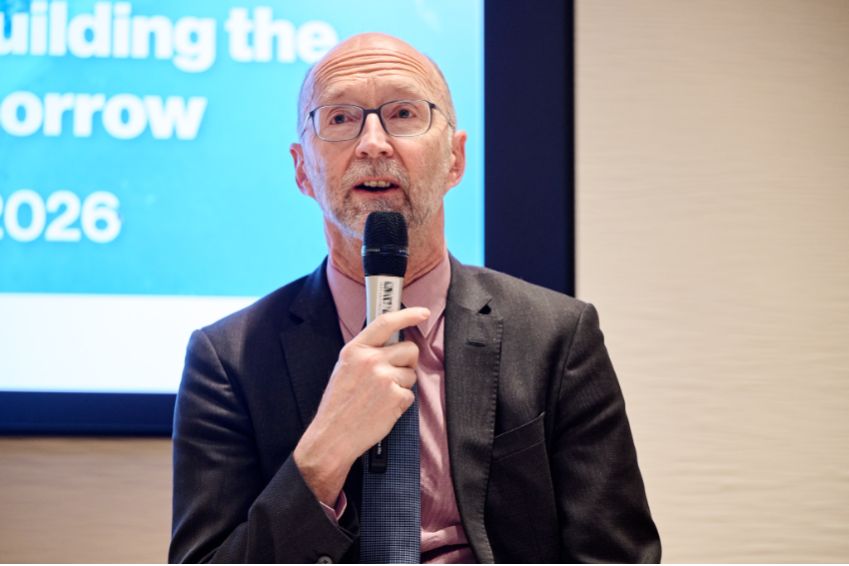 Matthew Baldwin, Deputy Director-General at the Commission’s Directorate-General for Energy
That tension between model and scale ran through the discussion.
Isabel Sabadi, CEO of 22@ Network, drew on Barcelona’s experience transforming a former industrial district into a knowledge hub, where changes to public space and urban design gradually reshaped how people lived and worked. Early resistance, she noted, often gives way once benefits become visible, particularly where regeneration improves everyday experience.
But she also underlined that such transformations depend on early design choices and long-term alignment between public objectives and private investment — particularly when cities are asked to innovate not only in infrastructure, but in how people live across different stages of life.
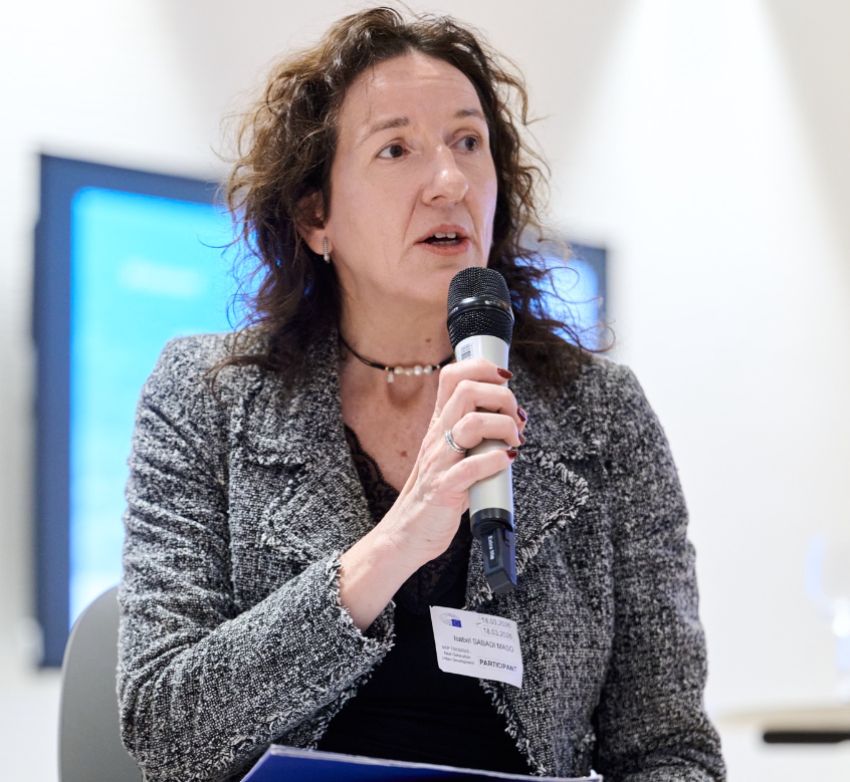 Isabel Sabadi, CEO, 22 @ Network
From the perspective of Europe’s cities, Nathalie Guri, Project and Knowledge Sharing Director at EUROCITIES, described regeneration as inherently systemic. “Solving one issue in isolation can create another,” she warned, pointing to the interaction between accessibility, climate resilience and urban design. The constraint, she suggested, is often not ambition but capacity, and the ability of city administrations to coordinate complex, cross-sector projects over time.
That challenge is equally visible on the delivery side. Gavriilidis pointed to the need for clear coordination structures, arguing that projects of this scale require a defined institutional “sponsor” to manage permitting and approvals across multiple authorities. Without that, even well-designed projects risk delay.
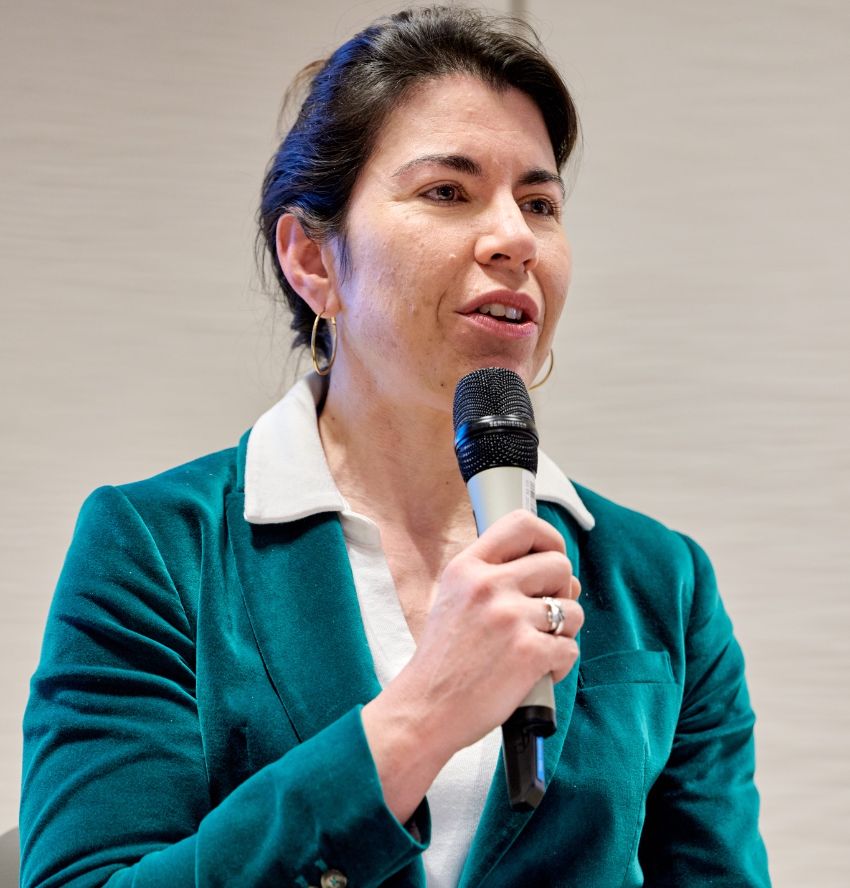 Nathalie Guri, Project and knowledge sharing director, EUROCITIES
Questions from the audience focused on how developments like The Ellinikon connect to wider transport systems and surrounding municipalities, and how to ensure they function as integrated parts of a city rather than standalone districts. Gavriilidis acknowledged that while internal design can prioritise walkability and reduce car dependence, broader connectivity depends on infrastructure decisions beyond the site itself.
In closing, Tsiodras described The Ellinikon not as an endpoint, but as a reference point, and a way of understanding what becomes possible when investment, design and policy align at scale.
The broader implication is that Europe is entering a new phase of urban development. The issue is no longer whether sustainable, human-centric city models can be designed, but whether they can be delivered, coordinated and replicated across very different urban contexts.
The test now is whether projects like the Ellinikon can become a blueprint for how Europe rebuilds its cities.
Sign up to The Parliament's weekly newsletter
Every Friday our editorial team goes behind the headlines to offer insight and analysis on the key stories driving the EU agenda. Subscribe for free here.