On Thursday 4 June, policymakers, investors and business leaders came together to discuss the future of entrepreneurship in Europe at an event held at the European Parliament in Brussels by The Parliament in partnership with Visa and co-hosted by MEPs Billy Kelleher (Renew, Ireland) and Elissavet Vozemberg-Vrionidi (EPP, Greece). The conversation centered on the practical enablers of growth: access to capital, secure digital payments, digital skills, and public-private cooperation that helps businesses move from local ambition to cross-border scale.
Guests entered the room to find small packets of artisan snacks - a small but pointed reminder of what the discussion was ultimately about: innovative products, built by empowered entrepreneurs.
The debate was not only about entrepreneurship in principle, but about what actually helps businesses succeed in practice: access to digital payments, strong cybersecurity, financial and digital skills, and partnerships that connect entrepreneurs with investors, mentors, and markets. Closing the access gap for Europe’s SMEs is essential to unlocking growth and opportunity
SMEs are the backbone of the economy - we should look after them
Within that wider growth agenda, women-led businesses emerged as one of Europe’s greatest opportunities. According to research from Frontier Economics, closing the gender gap in entrepreneurship could represent up to €250 billion in annual economic growth. Speakers argued that this is not simply about representation; it is about making Europe’s economy stronger by removing the frictions that keep promising founders from scaling. The challenge is not a lack of talent or ambition, but too often women entrepreneurs lack of access to capital, networks, skills, and market opportunities.
As MEP Billy Kelleher (Renew, Ireland) put it plainly: “SMEs are the backbone of the economy - we should look after them.” For Kelleher, Europe's bureaucratic burden falls hardest on those with the least resources to absorb it - new entrants, young people, and women.
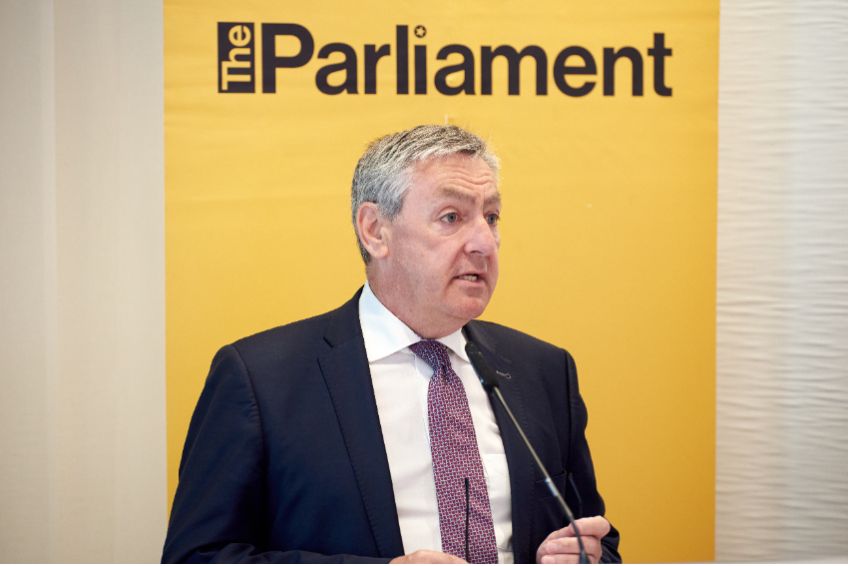 MEP Billy Kelleher (Renew, Ireland)
The capital gap is among the most urgent Europe needs to close. In 2025, 2% of private equity flowed to women-led businesses - in the Netherlands, where Clare Murray, Co-founding partner at Blume Equity, is based, it’s as little as 0.7%. Those who do invest see an average of 35% higher returns on investment compared with all-male teams, as Kelly Mahon Tullier, Vice Chair, Chief People and Corporate Affairs Officer at Visa, noted: “It's not about performance - the issue is access."
Beyond the numbers, a culture change is needed, too. Europe is well-known for being more risk-averse than its American counterparts in unleashing investment, and is even more conservative when it comes to investing in women-led businesses.
Speakers underlined the male-dominated nature of peer networks and investment circles, as well as the likelihood that women-led businesses tend to attract investment predominantly from women-led funds - a division that limits the flow of capital.
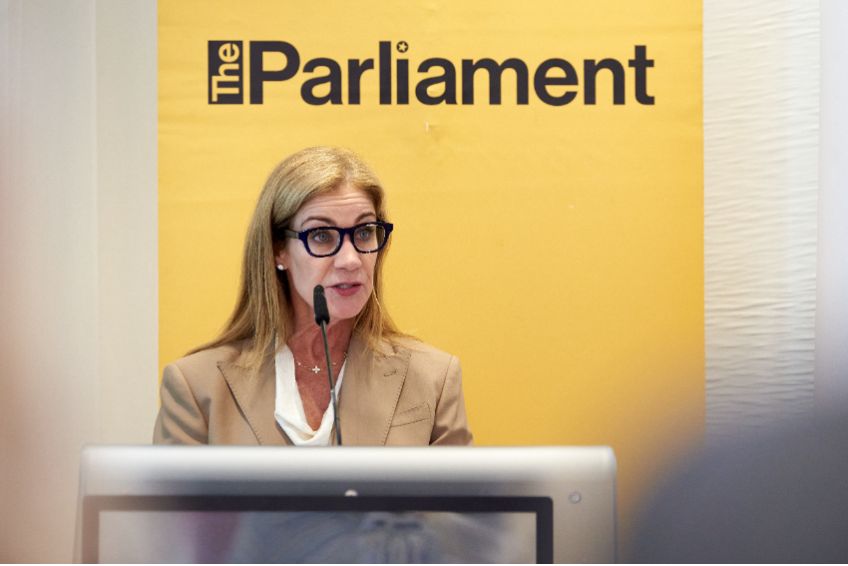 Kelly Mahon Tullier, Vice Chair; Chief People and Corporate Affairs Officer, VISA
Compounding this, European SMEs face a fragmented regulatory landscape - 27 different frameworks that make cross-border scaling prohibitively expensive compared to the more cohesive US market.
Tangibly, Murray listed a three-part wishlist from the point of view of a woman entrepreneur in the field: anchor commitments from public and private investors, dedicated pools of capital for women-led initiatives, and more women fund managers.
Visa's Kelly Mahon Tullier offered concrete proof of what investment in women-led businesses can achieve - highlighting Visa Foundation’s global investment of USD 60 million across 16 women-led venture funds. Over 700,000 small businesses and 700,000 jobs were supported.
It's not about performance - the issue is access
Visa Foundation’s €5 million anchor investment in the equity firm Blume Equity helped its co-founder, Murray, raise a €200 million fund targeting 15%+ returns. For Mahon Tullier, the results speak for themselves: "This is not a favour - it's fundamental to a thriving future society."
A second concrete example was offered by the founder of the snacks guests had noticed upon their arrival. Anna Ponomarenko, a Ukrainian refugee and business leader, arrived in Belgium with almost nothing. After launching SMKLK and Beer Crackers, an innovative snack made from upcycled Belgian brewery grain, born from her desire to create a product with deep roots in Belgian culture, Ponomarenko was a finalist in the Belgian Startup Awards and the 2025 Visa Everywhere Pioneers competition - which spotlights women entrepreneurs with refugee backgrounds across Europe.
Together, Murray and Ponomarenko were the human embodiment of what the discussion argued for: successful, profitable women-led businesses, empowered by access to capital and supportive leadership.
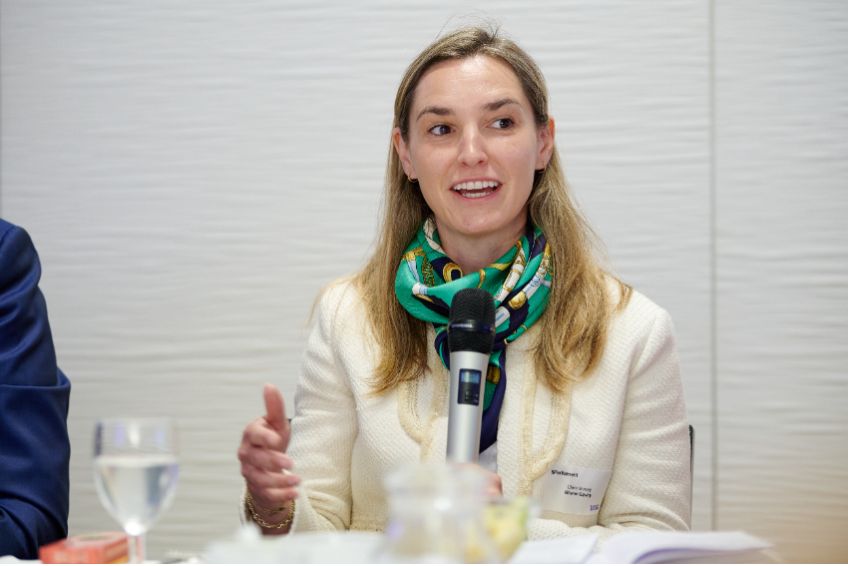 Clare Murray, Co-Founding Partner at Blume Equity
As breakfast came to a close, the conversation moved to the European Parliament’s VoxBox studio. There, Mahon Tullier was joined by MEPs Cynthia Ní Mhurchú (Renew, Ireland) and Sirpa Pietikäinen (EPP, Finland) for a deeper conversation on the challenges faced by women entrepreneurs - education, financial literacy, and more.
On education, a commonly proposed solution is to push women into STEM. For Pietikäinen, that approach skims the surface and should go deeper: "We don't talk enough about what kind of education STEM is. If you teach AI always by male examples, then you wonder why not all young girls are interested."
Ní Mhurchú highlighted another hurdle in women’s education, imposter syndrome - underlining that women could match men's confidence and ambition, provided they are given the right knowledge and mentorship. Mentorship as a tool to drive confidence in women entrepreneurs was echoed by Mahon Tullier, who noted the value of interacting with an experienced peer over any online programme. The message was clear: capital alone does not build confidence - structured human support does.
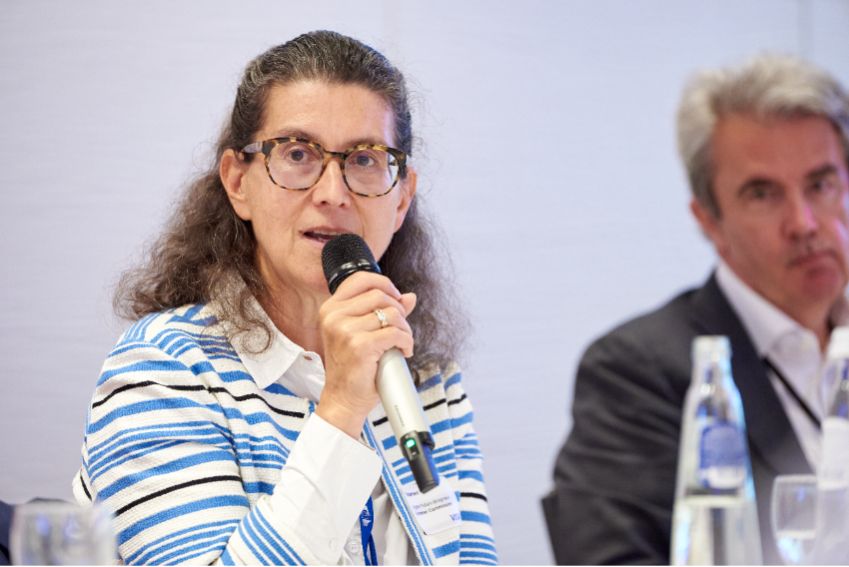 Brigitte Fellahi-Brognaux, Head of Unit for inclusive entrepreneurship, DG EMPL
The conversation shifted to financial literacy, on which both Pietikäinen and Mahon Tullier stressed the importance of giving founders early access to the right financial, digital and business skills, alongside networks and mentorship, so they can price confidently, grow sustainably, and compete across borders. Ní Mhurchú further insisted in the importance of financial education and providing the necessary support for women to be able to succeed because that is then translated in growth.
Mahon Tullier offered an encouraging, forward-looking note that the breakfast discussion attendees and viewers online could align on: "Let's come back in three years and show not just how many entrepreneurs are in business, but how many are women."
The takeaway was clear. Europe does not lack entrepreneurial potential. What matters now is whether it can do more to unlock it — starting with the businesses and founders ready to grow, and including the women-led businesses that remain one of the continent’s clearest untapped growth opportunities.
In partnership with

Sign up to The Parliament's weekly newsletter
Every Friday our editorial team goes behind the headlines to offer insight and analysis on the key stories driving the EU agenda. Subscribe for free here.