At Qualcomm’s Future of IP Forum, delivered by in partnership with The Parliament, policymakers, industry representatives, and scholars gathered to discuss whether Europe's intellectual property rules are agile enough to adapt to emerging technologies and breakneck AI growth.
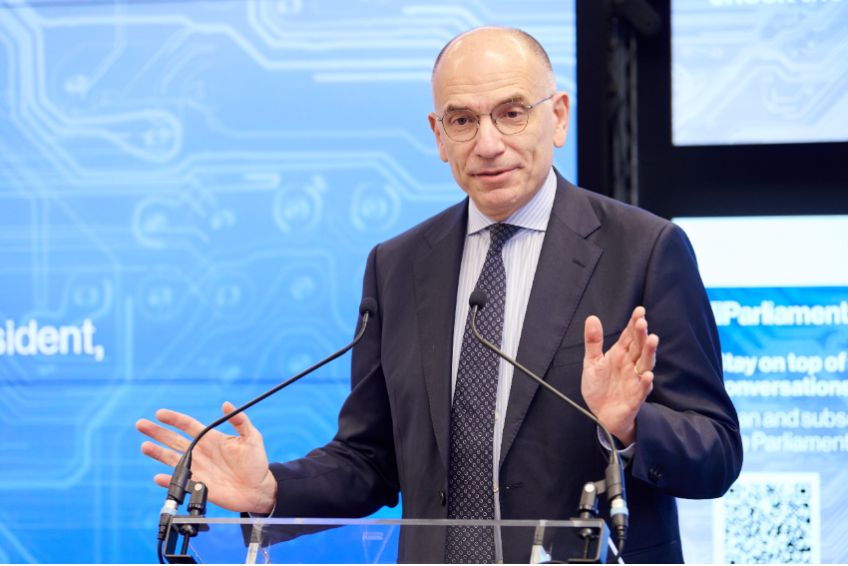
Former Italian Prime Minister and President of the Jacques Delors Institute Enrico Letta opened the discussion by urging policymakers to promptly implement the “One Europe, One Market” plan, a set of measures launched last month by the European Council to increase EU competitiveness by integrating finance, energy, and connectivity.
 Légende
According to Letta, the plan, which is expected to enter into effect by the end of 2027 at the latest, represents the EU’s “last chance” to retain cutting-edge businesses by accelerating the bloc’s financial market integration and will enable firms to ramp up investments in innovation. “What brings me to optimism is the fact that today, the sense of limit and fragmentation is common awareness”, he concluded.
Ann Chaplin, Qualcomm’s Executive Vice President, General Counsel & Corporate Secretary, said IP fuels a licensing ecosystem that generates breakthroughs globally. “In the last decade alone, we've put $70 billion into research and development,” she said. Whether 6G or innovation in sports live streaming, IP is a “critical motivator” to scale investments.
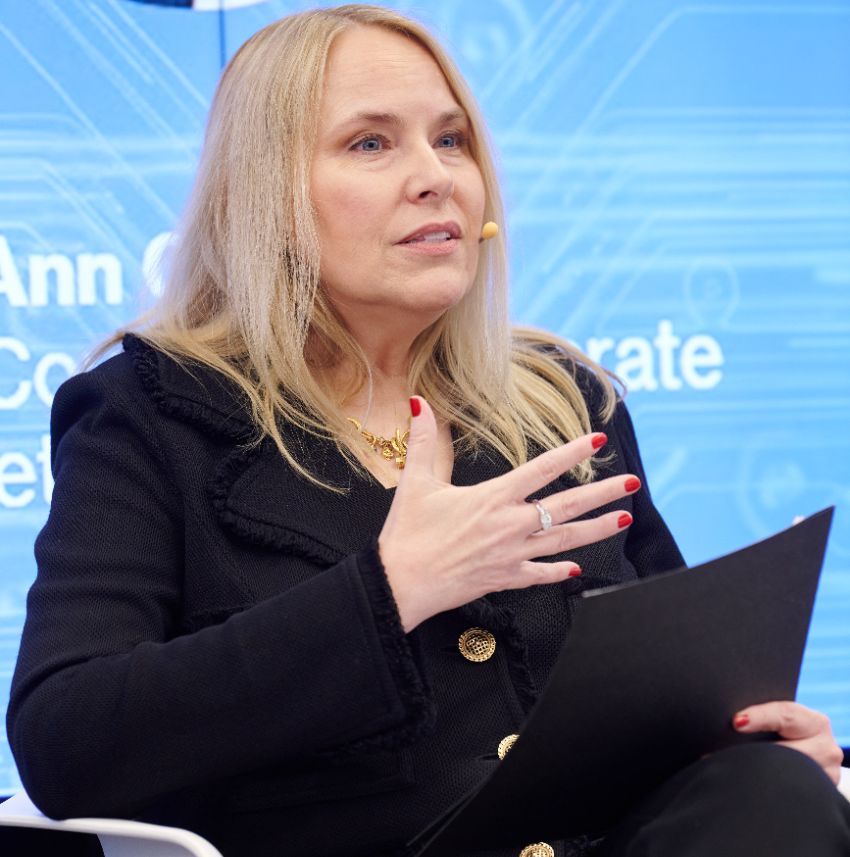 Ann Chaplin, Executive Vice President, General Counsel & Corporate Secretary at Qualcomm
Turning to AI, Chaplin hailed it as a “game-changer for accelerating invention“, but urged clear IP policies on protectability and disclosure to let businesses innovate responsibly. “We need to make sure we're exercising judgment.”
“AI will be transformational, but it does not have to be lawless,” said Horacio Gutierrez, Senior Executive Vice President, Chief Legal and Global Affairs Officer at The Walt Disney Company, echoing Chaplin.
Gutierrez also stressed the importance of rules that protect consumers and foster creativity without eliminating the freedom to innovate. “Having to sacrifice the creative industries for the technology industry to be able to progress is a false choice.”
Delving into the importance of having a solid and harmonised system of rules governing innovation, Francesca Ferrari, IP expert and Professor at Insubria University, shed light on what makes Europe’s IP law robust.
The protection of intellectual property is crucial for the competitiveness of most companies across Europe
The European Intellectual Property Rights Enforcement Framework does not need “fundamental rethinking”; it is already effective because it delivers predictable solutions, Ferrari argued. Its enforcement, she explained, relies on a clear rule, also called an injunction: if someone uses an idea without permission, the owner should be able to stop them.
However, challenges arise when some companies innovate to develop their own products, while others, such as SMEs or research organisations, rely on selling licenses.
The real test is not to eliminate such differences, but to manage them in a balanced and predictable way, she said. “Competitiveness consists of how Europe will be able to translate innovation into economic value.”
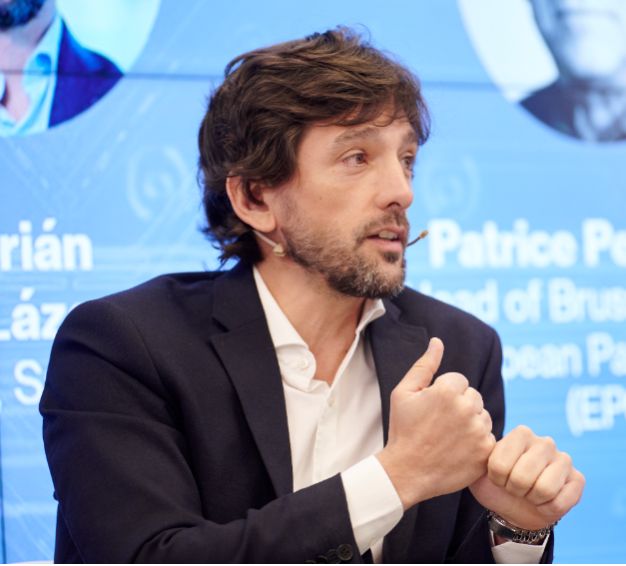 MEP Adrián Vázquez Lázara (EPP, Spain)
Her opinion was largely shared by MEP Adrián Vázquez Lázara (EPP, Spain), who called for stakeholders to “build on the existing legal framework to ensure the bloc’s harmonised patent enforcement mechanism” – the Unified Patent Court (UPC), which provides legally binding forum for patent disputes in only 18 adhering member states, – works coherently.
Building on Lázara’s argument, Patrice Pellegrino, Head of the Brussels office of The European Patent Office (EPO), called on policymakers and industry representatives to work towards a well-functioning and EU-wide UPC, to create a simplified legal ecosystem that slashes risks and costs associated with patent litigation. “If we want to keep our industries here in Europe, we need to create the ecosystem. The simpler, the better”, he said.
The companies’ risk related to IP infringement has been explored further by Ania Helseth, AI and Media Policy Lead at Meta. She explained the group’s approach to trademark protection, including the use of AI and Large Language Models (LLMs) to “track fraudulent accounts and quickly take down illegal content and scams”.
AI will be transformational, but it does not have to be lawless
Helseth also commented on the legal framework they operate, including the Digital Services Act (DSA) – the EU rulebook on how social media, marketplaces, and search engines can operate online while protecting user rights – saying it provides a “structural approach” for establishing systems that can tackle infringements at scale.
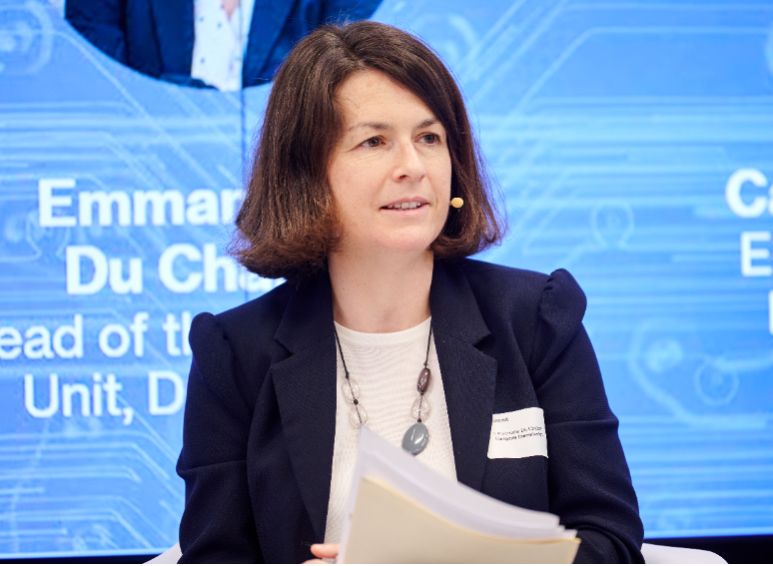 Emmanuelle Du Chalard, Head of the Copyright Unit, DG CNECT
“I think the framework to tackle those problems exists,” Helseth said, adding that what counts most is that this framework is supplemented and further supported by a continuous dialogue between platforms, brands, and regulators like the European Commission and European Union Intellectual Property Office (EUIPO).
Emilie Anthonis, President and Managing Director EMEA at the Motion Picture Association (MPA), whose members include giants like Netflix and Disney, highlighted the role of IP and AI in a high‑risk industry that rewards originality.
In the last decade alone, we've put $70 billion into research and development
Despite AI being a powerful tool, “human judgment remains the driving force behind creative works”, she said. She also argued that the existing regulatory framework can adapt to new technology, adding that the priority for innovation to flourish is giving creators and rights holders strong, exclusive control over their works. “The importance of strong IP has never been clearer today. It's really the cornerstone for Innovation”, she said.
However, Emmanuelle Du Chalard, Head of Unit for Copyright at the European Commission’s Directorate-General for Communications, Networks, Content and Technology (DG CNECT), reminded the room that an ongoing external study, followed by a stakeholder consultation, “will assess whether the Digital Single Market (DSM) directive” - adopted in 2019 to update EU copyright law for the digital age – “is fit for purpose in the current technological context” or if there is a need for additional financing.
Live-events piracy is a pressing concern for the entertainment industry, Anthonis explained, as it undermines the industry’s capacity to regain investments, and called on policymakers to collaborate on cross-border enforcement and implement dynamic injunctions.
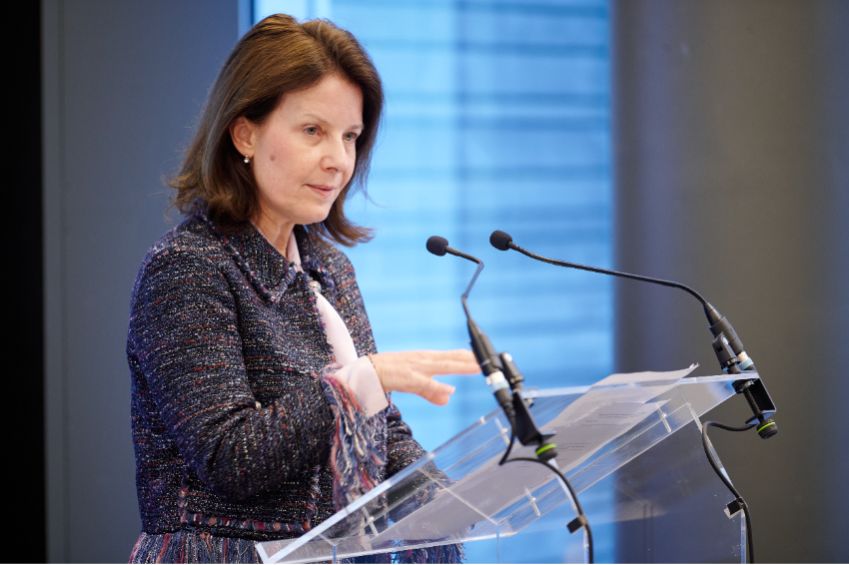 Nathalie Berger, Director for Competitiveness Coordination, DG GROW
Delivering the closing remarks, Nathalie Berger, Director for Competitiveness Coordination at the European Commission’s Directorate-General for Internal Market, Industry, Entrepreneurship and SMEs (DG GROW) reminded of the importance of the “protection of intellectual property is crucial for the competitiveness of most companies across Europe”, and stressed the contribution of the “design intensive industries”, which, she said, “contribute to 15% of Europe’s GDP”.
As the discussion came to an end, a broad consensus emerged on the need to build on existing rules to push for a well-funded and harmonised IP system that boosts Europe’s competitiveness. Yet, the extent to which these calls to action will result in coordinated action across Member States is to be seen.
Sign up to The Parliament's weekly newsletter
Every Friday our editorial team goes behind the headlines to offer insight and analysis on the key stories driving the EU agenda. Subscribe for free here.