As thirty million Europeans live with a rare disease, The Parliament’s Rare Diseases Forum gathered policymakers, researchers, industry executives and patient advocates to discuss how Europe does move from fragmented progress to a coherent and holistic strategy.
One of the day’s central questions emerged early. The European Parliament has used its own initiative procedure to call for an EU Rare Disease Action Plan - a move widely welcomed as overdue. But for some in the room, a plan is not enough.
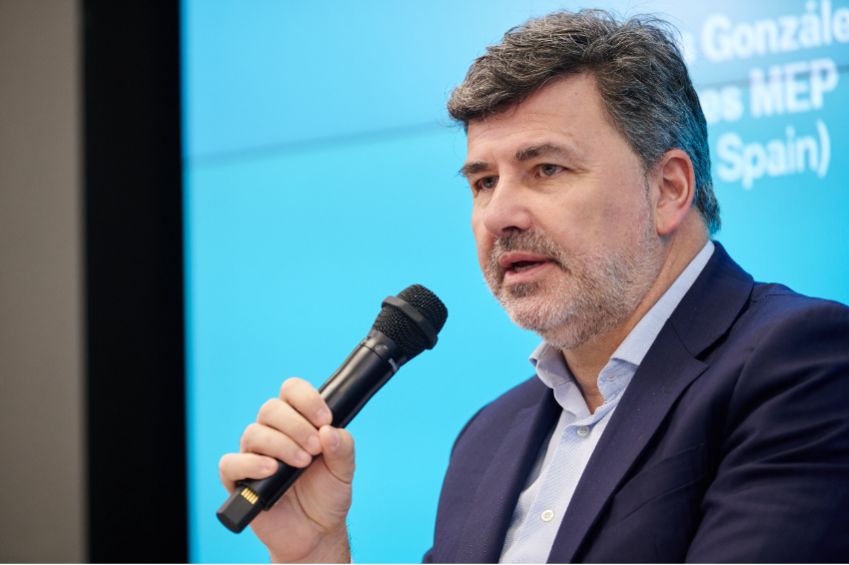
“I don’t want a plan on rare diseases. I want a regulation,” said MEP Nicolás González Casares, (S&D, Spain) and rapporteur on rare diseases legislation, emphasizing the need for bold policy to meet a pressing problem.
Europe, speakers noted, has demonstrated its capacity for decisive legislative action before - COVID and the response to the war in Ukraine were cited as recent examples. The infrastructure for rare diseases already exists: European Reference Networks (ERNs), Health Technology Assessment (HTA) regulation, and a reformed pharmaceutical framework. The challenge is not building more pieces, but connecting what already exists.
 Légende
Speakers highlighted the many facets of this complex issue: introducing newborn screening standards, reducing fragmentation across member states, accelerating access to emerging treatments like gene therapy, among others. And a recurring fault line ran between patient advocates - who insisted that safety should not be compromised in any circumstance - and industry representatives urging less red tape to get treatments to patients sooner.
Unequal access to medicines across the EU’s structurally diverse Member States is another sensitive issue of the rare disease debate. Early access schemes for innovative medicines were put forward as a promising tool - provided that speed does not come at the cost of patient safety.
For MEP Vytenis Andriukaitis (S&D, Lithuania) and former European Commissioner for Health, the answer lies in deeper integration: “It’s time now to discuss a Common Pharmaceutical Policy.” His call to strengthen the European Health Union was met with a sobering reality check: that further integration, however desirable, is a slow and resource-intensive process - and millions of patients cannot wait. Yet the room agreed on at least one thing: sustained, structured dialogue between all stakeholders is the only path to durable progress.
The conversation also surfaced a wider tension that became a leitmotif of the policy debates: how to attract private investment in orphan drugs while considering affordability and payers’ needs, all in the context of a layered regulatory framework.
I don’t want a plan on rare diseases. I want a regulation
The session on the EU Biotech Act captured the phenomenon of scientific innovation colliding with a policy environment that struggles to keep up. “We are at a golden moment after 40 years of research,” said Alexandre Mejat, Scientific International Affairs Manager at AFM Téléthon. “The treatments are available, but now we need further investment and extensive implementation.”
Europe’s current health files - the Biotech Act, the Life Sciences Strategy, and the Critical Medicines Act - were broadly welcomed as a step in the right direction, but not a sufficient one. A particularly pointed critique came from Jane Cooper, SVP and Region Head for Europe, Middle East and Africa at Ultragenyx, who argued that Europe’s 70-day regulatory review timeline is too slow. “It should be 30,” she said, pointing to faster approval processes in the United States, the UAE and Saudi Arabia that Europe should aspire to reach.
Speakers stressed the need to position Europe as a genuine global hub for medical innovation - which means not only streamlining regulation, but strengthening collaboration between ERNs, investing in long-term research infrastructure, and creating conditions that attract scientific talent and private investment.
Two specific policy instruments dominated the afternoon’s discussions: Joint Clinical Assessments (JCAs) and the European Health Data Space (EHDS).
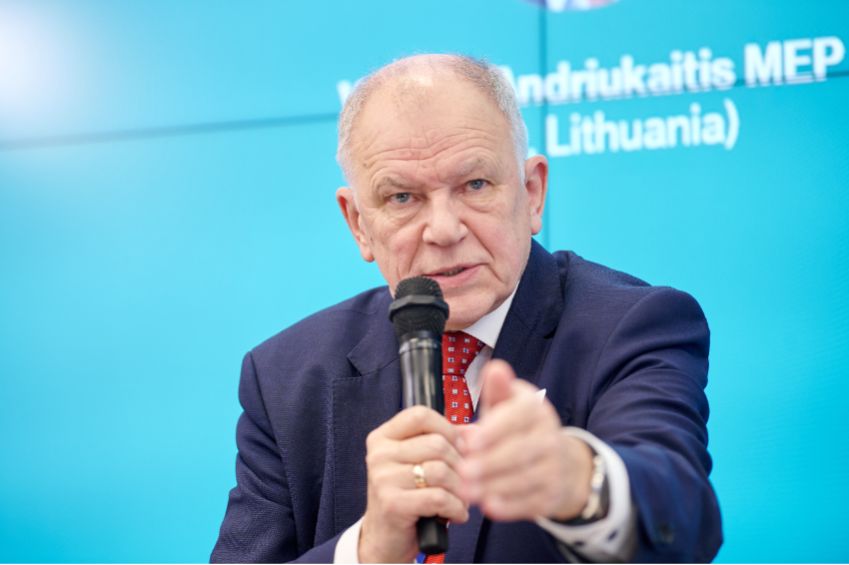 MEP Vytenis Andriukaitis (S&D, Lithuania)
Adopted in early 2025, the JCA legislation was described as a strong foundation - but an incomplete one. Maya Matthews, Head of Unit for Health Technology Assessment at the European Commission, acknowledged that more work is needed to accelerate patient access, streamline cross-border processes, and “connect the dots better”.
Patient advocates and industry representatives echoed this, pointing out that the current framework might not be the best instrument to address rarer orphan diseases, and that additional funding is needed to speed up processes and reduce treatment costs. Matthews remained positive that “the Commission remains actively engaged with stakeholders to improve the framework”, while other speakers raised the possibility of "more obscure policy levers” beyond the JCA.
On data, speakers were more optimistic but remained cautious. The session highlighted the transformative potential of patient data - channeled through frameworks such as ERDERA, JARDIN and the EHDS - to make R&D more efficient and reduce the burden on overworked clinicians.
The EHDS, currently in its implementation transition period, was framed as an opportunity to build a high-quality data space that avoids silos. Two complementary approaches to data protection were proposed: strong industry compliance with data protection principles, and improved digital literacy for patients willing to share their data.
The treatments are available, but now we need further investment and extensive implementation
The forum closed with a look beyond Europe’s borders. Initiatives including ERDERA were praised for their cost-efficiency in pooling knowledge and resources through regulatory sandboxes, the exchange of best practices, and joint procurement. But scaling these models globally remains a challenge, and Europe’s capacity to project influence on the global stage in rare disease R&D remains underdeveloped.
Speakers urged Europe to hold firm to its patient-first regulatory standards when engaging with jurisdictions that take a more permissive approach - while acknowledging that observing different regulatory frameworks in practice offers valuable comparative insight.
If the 2026 Rare Diseases Forum had a single animating theme, it was connection: connecting patients, member states, payers, industry, and research into something more coherent than just a collection of policies. A shared conviction emerged from the conversation: rare diseases are not a niche concern, and the cost of continued fragmentation - measured in lives - is not one to be ignored. The pieces are on the table. Now policymakers need to assemble the puzzle.
Sign up to The Parliament's weekly newsletter
Every Friday our editorial team goes behind the headlines to offer insight and analysis on the key stories driving the EU agenda. Subscribe for free here.