NATO recently set a target for member countries to spend at least 1.5% of GDP on civil prepar- edness, resilience and critical infrastructure. Why is this shift important?
Joe Papa: It’s a critical step forward and acknowledgement that modern defence extends far beyond traditional military power. The threats we face today—cyber- attacks, disinformation campaigns and biological threats—can destabilize societies as much as conventional warfare. NATO’s 1.5% target recognizes that resilience, including biodefence, is an important part of national security. Now that this commitment has been made, it is important for NATO to ensure the target drives real capability.
The declaration did not provide definitions or eligible categories for the 1.5% target, nor an oversight mechanism. How can we ensure the target is treated by past and future governments as intended?
Real resilience means the measurable capability to anticipate, withstand, and recover from crises. In a fiscally challenging climate, the impulse may be – understandably - for governments to meet the benchmark by re-labelling existing spending. Instead, NATO members should use this spending as an opportunity to fully develop their preparedness and response strategies for today’s threats.
As the UK Centre for Long-Term resilience has argued, resilience demands long-term investment, clear governance, and public accountability. Without that, the 1.5% target risks repeating old mistakes, believing the public is immune from unseen threats, followed by a potentially slower or less effective response than if a plan was in place.
The 3.5% spent on conventional defence should equip NATO countries to fight wars and perform other military operations. The 1.5% for resilience must prepare them to respond to other types of threats. To achieve that, governments should develop dedicated national resilience budgets that priortise the complicated threats which often cross multiple government ministries and cause severe impacts to society, like biosecurity, cyber defence and supply chain integration.
The threats we face today– cyberattacks, disinformation campaigns and biological threats—can destabilise societies as much as conventional warfare
Why do you believe biosecurity should be a top priority for NATO’s resilience spending?
Biosecurity is an essential part of national security. Biological threats—whether natural, accidental, or deliberate—have the potential for significant societal disruption. COVID-19 exposed the fragility of our public health system and supply chains, while rapid advances in biotechnology and AI have revived concerns about the deliberate misuse of pathogens.
In the UK, the Government’s National Risk Register, which assesses the impact and likelihood of different risks, continues to classify both pandemics and CBRN-related incidents among the highest-impact risks facing the country, noting a 5–25% likelihood of another pandemic occurring within the next five years.
True biosecurity requires long-term investment: stockpiling vaccines and therapeutics, maintaining surge manufacturing capacity, strengthening biosurveillance networks, and training personnel. Today, most NATO countries still rely on fragmented budgets with little strategic coordination or accountability. That has to change in order to quickly and effectively respond to future threats.
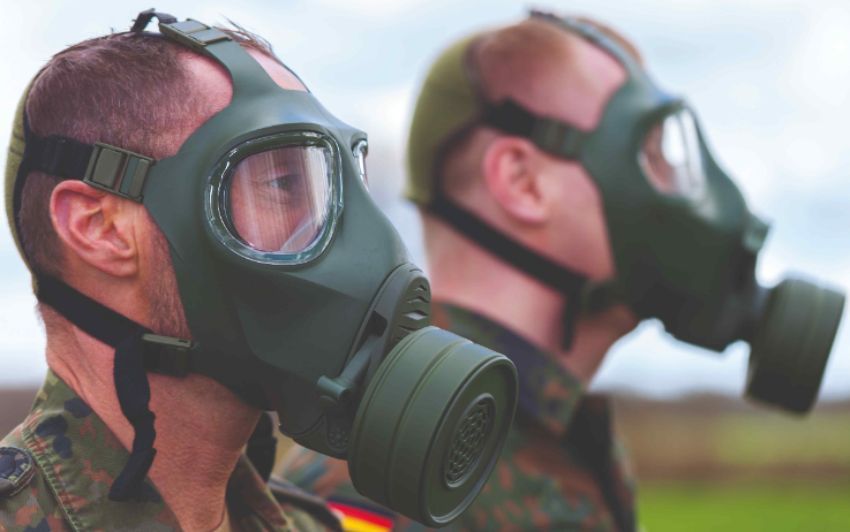 NATO countries should start by ring-fencing a portion of their resilience budgets specifically for biosecurity
Are there models NATO countries can follow to improve their Biodefence spending?
Germany’s recent commitment to increase its overall defence spending over the next five years is an important milestone. Germany’s decision and actions provide a model for other NATO countries and will help build a more secure and capable alliance. Sustained investment and transparency signals to industry what’s needed and aligns public and private efforts around robust preparedness.
NATO countries could start by ring-fencing a portion of their resilience budgets specifically for biosecurity. There also is an opportunity for further collaboration to tackle cross-border health threats, such as joint procurements of medical countermeasures, equipment and services. These actions would show real intent to strengthen preparedness for low-probability, high-impact events that could threaten NATO’s collective defence posture as profoundly as any missile or cyberattack.
True biosecurity requires long-term investment: stockpiling vaccines and therapeutics, maintaining surge manufacturing capacity, strengthening biosurveillance networks, and training personnel
Final thoughts—what’s at stake if NATO countries don’t increase their spending on Biodefence and preparedness?
The stakes couldn’t be higher. If governments underfund resilience, there is a risk of repeating old mistakes: panic spending in crisis, underfunding in peace- time, and vulnerabilities that threaten NATO’s collective defence. But with real cross-sectoral investment, transparency, and accountability, resilience—including biodefence—can become a true pillar of security for the Alliance.
In partnership with

ABOUT EMERGENT BIOSOLUTIONS
For over 25 years, Emergent has been at work prepar- ing those entrusted with protecting public health by delivering protective and life-saving solutions for health threats like smallpox, mpox, botulism, Ebola, anthrax and opioid overdose emergencies. To learn more about how Emergent helps prepare communities around the world for today’s health challenges and tomorrow’s threats, visit its website and follow Emergent on LinkedIn, X, Instagram, Apple Podcasts and Spotify.
Sign up to The Parliament's weekly newsletter
Every Friday our editorial team goes behind the headlines to offer insight and analysis on the key stories driving the EU agenda. Subscribe for free here.