At the European Parliament in Strasbourg, policymakers and industry representatives gathered for a discussion organised by FuelsEurope, in partnership with The Parliament, on the revision of the EU’s CO₂ emission standards for light-duty vehicles, a debate that is rapidly becoming a broader test of how Europe balances climate ambition with industrial competitiveness.
The central question running through the evening was whether the next phase of EU transport policy should continue to rely primarily on electrification, or whether lawmakers should create a more technology-neutral framework that gives a larger role to renewable and low-carbon fuels.
Opening the discussion, MEP Jan-Christoph Oetjen (Renew, Europe), host of the event said the automotive sector remains one of Europe’s most important industries, but one that “faces simultaneous pressure from global competition and regulation”. He argued that experience since the last mandate had shown policymakers that market developments had not always matched earlier expectations.
“We need more flexibilities in this regulation,” he said, adding that investors also need certainty that alternative fuels will have a viable market beyond 2035. For Oetjen, the objective should remain emissions reduction, but with “all means that are at our hands.”
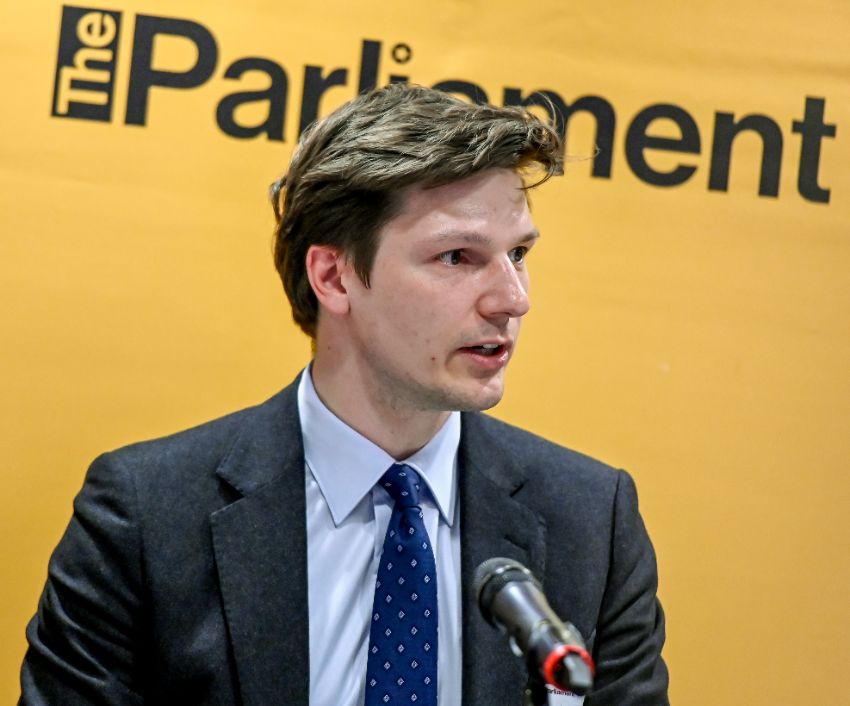 Mitja Schulz, Vice-President European Affairs at VDA
That message was echoed by Mitja Schulz, Vice-President European Affairs at VDA, who outlined the scale of the challenge facing manufacturers. He said the sector is investing heavily in electrification and climate-neutral mobility, but warned that “existing targets are increasingly difficult to meet under current market conditions”.
“The regulatory framework has to function, it has to work,” he said, arguing that future rules must offer more flexibility while keeping climate objectives intact.
Alessandro Bartelloni, Director of FuelsEurope, then argued that Europe should avoid choosing one technology at the expense of others and described sustainable fuels and electrification as “complementary tools” rather than competing options. He also said transport decarbonisation is too large a challenge for policymakers to exclude viable pathways and called on the European Parliament to recognise fuels eligible under existing renewable energy legislation, expand compliance options and provide stronger investment signals for producers.
The conversation then shifted into a wider exchange with key industry participants from the audience, where speakers repeatedly linked regulatory design to competitiveness, jobs and industrial resilience.
Cars which are using renewable fuels should have the same status as electric cars
MEP Matej Tonin (EPP, Slovenia) said the previous policy direction had created concern by favouring technologies where Europe risks dependence on external actors while weakening areas where European industry has traditionally led. “Cars which are using renewable fuels should have the same status as electric cars”, he said, and added that this would be the clearest expression of technology neutrality.
From the perspective of the automotive sector, Johannes Schmidt, Drivetrain policy at BMW, said manufacturers remain committed to emissions reductions, but need a wider toolbox. He argued that “relying on several technologies would make Europe more resilient” because different systems come with different supply-chain dependencies.
Schmidt also stressed that some solutions often discussed as future concepts already exist today, as vehicles capable of operating with verified renewable fuels can contribute immediately if regulation allows them to count toward compliance.
Lucia Odone, Head of European Government Affairs at ENI, brought the perspective of fuel producers already investing in renewable capacity. She said “companies have committed billions of euros to convert refining assets into biorefineries”, but long-term business cases depend on access to broad end markets, including road transport. Her message to policymakers was that when fuel producers, carmakers and suppliers speak in similar terms, it signals a strategic opportunity that should not be ignored.
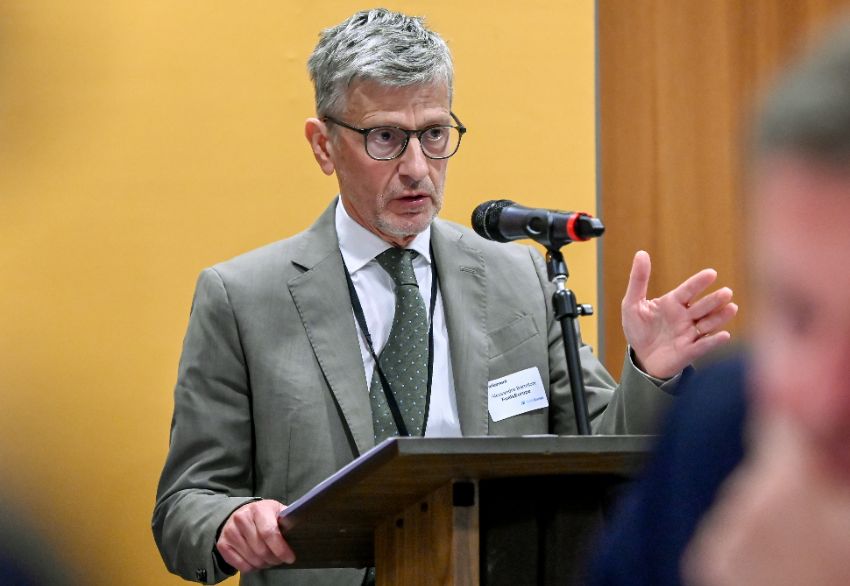 Alessandro Bartelloni, Director of FuelsEurope
Sheding light on the need for Europe to combine the protection of industrial assets and the acceleration of decarbonisation at scale, Eric Quenet, Deputy Director for EU Public Affairs at TotalEnergies, warned that “European companies investing in new technologies must compete globally against producers operating under different rules”, making industrial protection and strategic autonomy increasingly relevant to climate policy.
Innovation was a recurring theme in interventions from the energy sector. Ana Alvarez, Head of EU Affairs at Repsol, said “companies had invested in renewable fuels years before policy certainty emerged” because they believed it was their responsibility to develop new decarbonisation options, and that regulation should therefore leave space for engineers and innovators to continue delivering solutions rather than narrowing the field too early.
We need more flexibilities in this regulation
The supplier perspective came through strongly in remarks by Dr. Philipp Ellett, Manager for Politics & Sustainability at ZF Group , described how political expectations around CO2 targets had stipulated supplier companies to invest heavily into electrification, only to find out that market reality just did not meet the forecasts, leading to a severe crisis of the industry and jobs at risk. He argued that plug-in hybrids and renewable fuels would be a technological dream team by combining lower emissions with flexibility for consumers and industry. “For suppliers managing real factories and jobs”, he concluded, “policy realism matters”.
Several interventions also returned to affordability and consumer choice, as some speakers from the audience noted that transitions succeed only when technologies are practical and accessible for households, not just technically possible on paper. Others stressed that climate neutrality should focus on reducing carbon emissions rather than banning specific technologies.
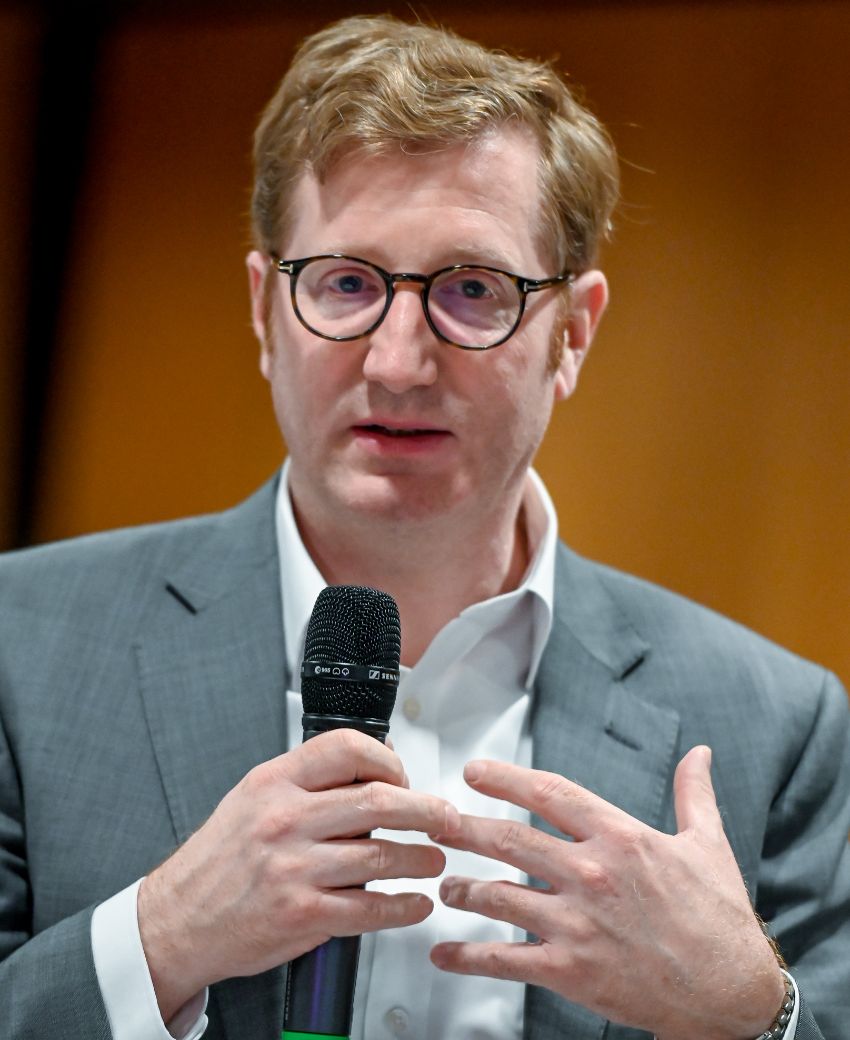 MEP Jan-Christoph Oetjen (Renew, Germany)
Closing the evening, Oetjen said the current European Parliament “has an opportunity to produce a more durable compromise than the polarised battles of the previous mandate”. He warned against repeating a left-versus-right clash that simply reverses old decisions without creating lasting certainty.
Instead, he called for a stable framework capable of supporting investment, competitiveness and emissions reduction over the long term.
The shared conclusion from the room was clear: Europe’s climate goals remain unchanged, but the route to achieving them is once again open for debate allowing for technology neutrality, and renewable fuels to be recognised in the revised CO2 standards for light-duty vehicles. The coming legislative negotiations will now determine whether the EU opts for a single pathway or a broader mix of technologies to drive the transition.
In partnership with

Sign up to The Parliament's weekly newsletter
Every Friday our editorial team goes behind the headlines to offer insight and analysis on the key stories driving the EU agenda. Subscribe for free here.