Europe’s clean-energy transition is no longer constrained by a lack of wind turbines or solar panels - it is constrained by the grid that connects them. With more than €1 trillion in grid investment needed by 2040 and the Commission preparing its European Grids Package, the EU is approaching a once-in-a-generation choice: continue with 27 fragmented national systems, or build a continental supergrid capable of moving clean power across borders at scale.
That choice was at the heart of a recent dinner discussion in the European Parliament in Strasbourg, where MEPs, engineers and investors explored what a pan-EU grid would mean for affordability, security and competitiveness, and whether Europe’s institutions are finally aligned enough to deliver it.
We are throwing away seven billion euros per year, because we're not able to deliver electricity from where it's being produced to where it can be used - MEP Bruno Tobback
At the event - by The Parliament magazine and supported by SupergridEurope - attendees heard how Europe is building wind and solar faster than any region in the world, yet the full benefits are not being realised. Bottlenecks, congested lines and decade-long permitting delays are pushing up prices and slowing progress. The underlying problem is structural. Europe’s grids were never designed to move renewable electricity across an integrated, 27-country market.
-compr.jpg) MEP Seán Kelly (Ireland, EPP)
MEP Seán Kelly (Ireland, EPP)
MEP Seán Kelly (Ireland, EPP), one of the co-hosts of the event, underlined the scale of the task: Europe will not meet its 2030, 2040 or 2050 CO₂ reduction targets, nor remain competitive, without expanding and interconnecting its continental grid “at a scale we have not yet attempted.”
The European Commission is expected to publish its Grid Package later this month. Kelly predicted joint European Council – European Parliament backing for an ambitious and credible deal, noting broad support from MEPs in a recent vote on modernising and expanding grids to reach net-zero targets: “Once there’s a good package, it must happen,” he said.
MEP Bruno Tobback (Belgium, S&D), the second co-host of the event and former Belgian Minister of the Environment, stressed that an unusually wide coalition in Parliament supports a supergrid push, noting a general consensus to back a deal. He argued that Europe must avoid “electrifying at two speeds,” as electricity prices are cheaper in the West than they are in the East.
He called for a more top-down approach to strategic planning and determined action on financing cross-border interconnectors to bring cheaper power to households and industry.
-com.jpg) MEP Bruno Tobback (Belgium, S&D)
MEP Bruno Tobback (Belgium, S&D)
Lesley O’Connor, Founder and Executive Chair of Trifecta EnergyCLG, and Oxford Global Projects’ Senior Expert Gareth Dooley then set out the economic case for a European supergrid. O'Connor said that returns on investment justify urgency, as private capital is increasingly shifting toward transmission where stable, regulated revenues and system value are clearest. “We frame it as costs, but it is an investment,” she noted, pointing to multiple analyses showing multiples of savings per euro invested in grids. Dooley said that Europe must “move from vision to execution,” using real data rather than wishful thinking to sequence projects and de-risk delivery.
MEP Sirpa Pietikäinen (Finland, EPP) argued that investments could be incentivised with current existing tools, saying that “not all of us are scared about the devilish word of the Eurobonds”, which, she said, she has been advocating for years.
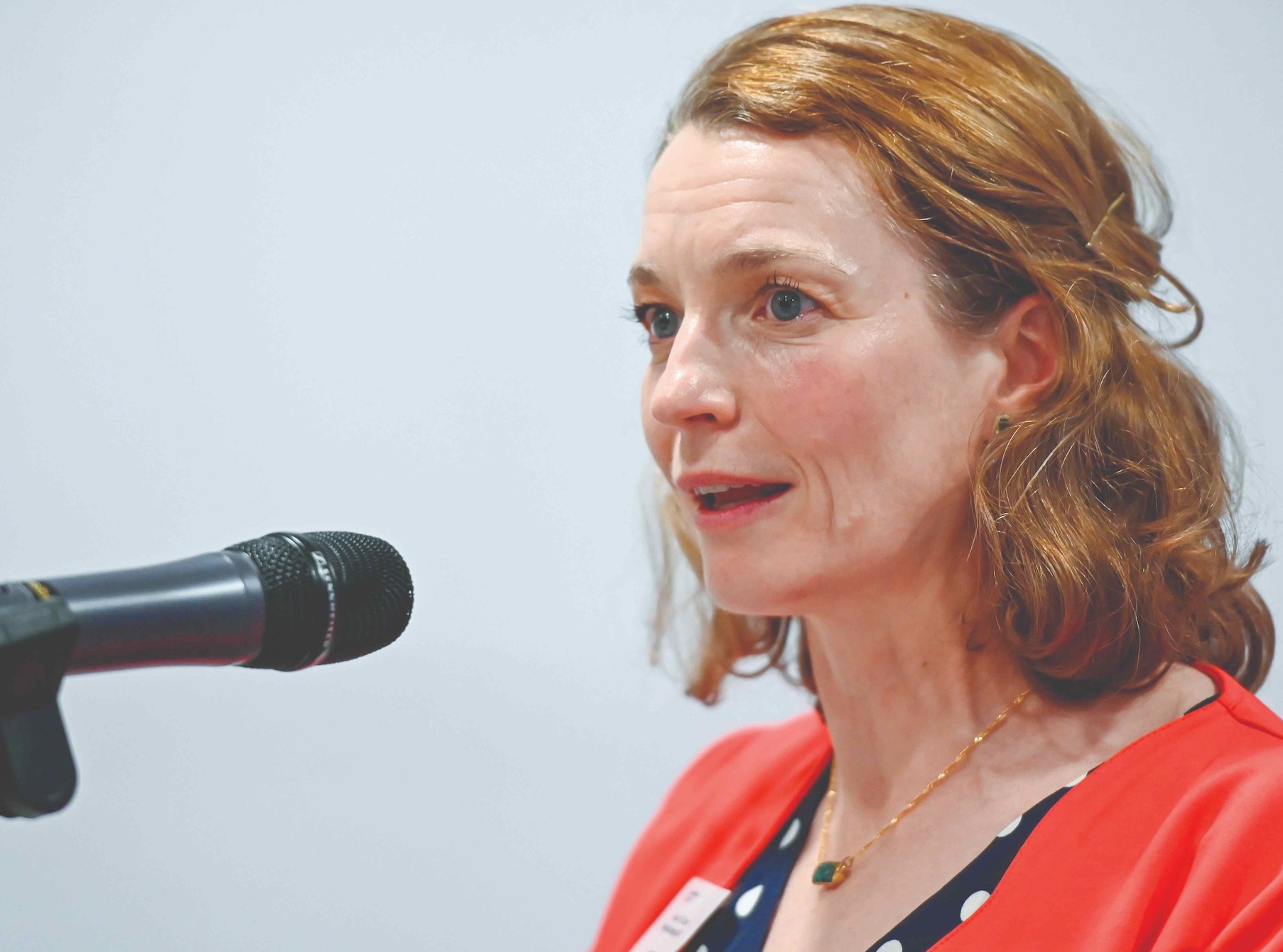 Lesley O’Connor, Founder and Executive Chair of Trifecta EnergyCLG
CurrENT Europe’s Secretary General Layla Sawyer then added that European coordination would facilitate innovation for national grid operators by allowing a continental-scale knowledge sharing among the sector, which would benefit consumers by solving “a problem with a lower cost technology, which could save millions for society”.
Speakers unanimously agreed that Europe's current grid system - characterised by a bottom-up patchwork of point-to-point links - cannot deliver the redundancy, resilience and cross-border optimisation that a system based on high use of renewables would require.
Once there’s a good package, it must happen - MEP Seán Kelly
A top-down blueprint, which could potentially be anchored by a European Grid Master Plan and strengthened institutions, could coordinate planning, identify network gaps and unlock private capital at continental scale. Participants recalled both the Parliament’s June resolution and the Council’s May conclusions, which already point toward such a model.
Kelly cited Europe’s experience with guarantee-driven investment models, arguing that smart use of European Investment Bank-backed instruments can crowd in capital for strategic infrastructure that lowers bills and strengthens independence. “If we can’t get investment for that, how are we going to get investment for defence?” he asked, pointing out that grids are as much of a security asset as a climate one.
O’Connor then returned to the investor lens and insisted that capital will flow if the business case is clear, stable, and can ensure regulated returns, predictable pipelines, standard interfaces, and credible governance. With those pieces in place, she said, grid programmes can attract a lot of private investment toward transmission, multiplying public funds.
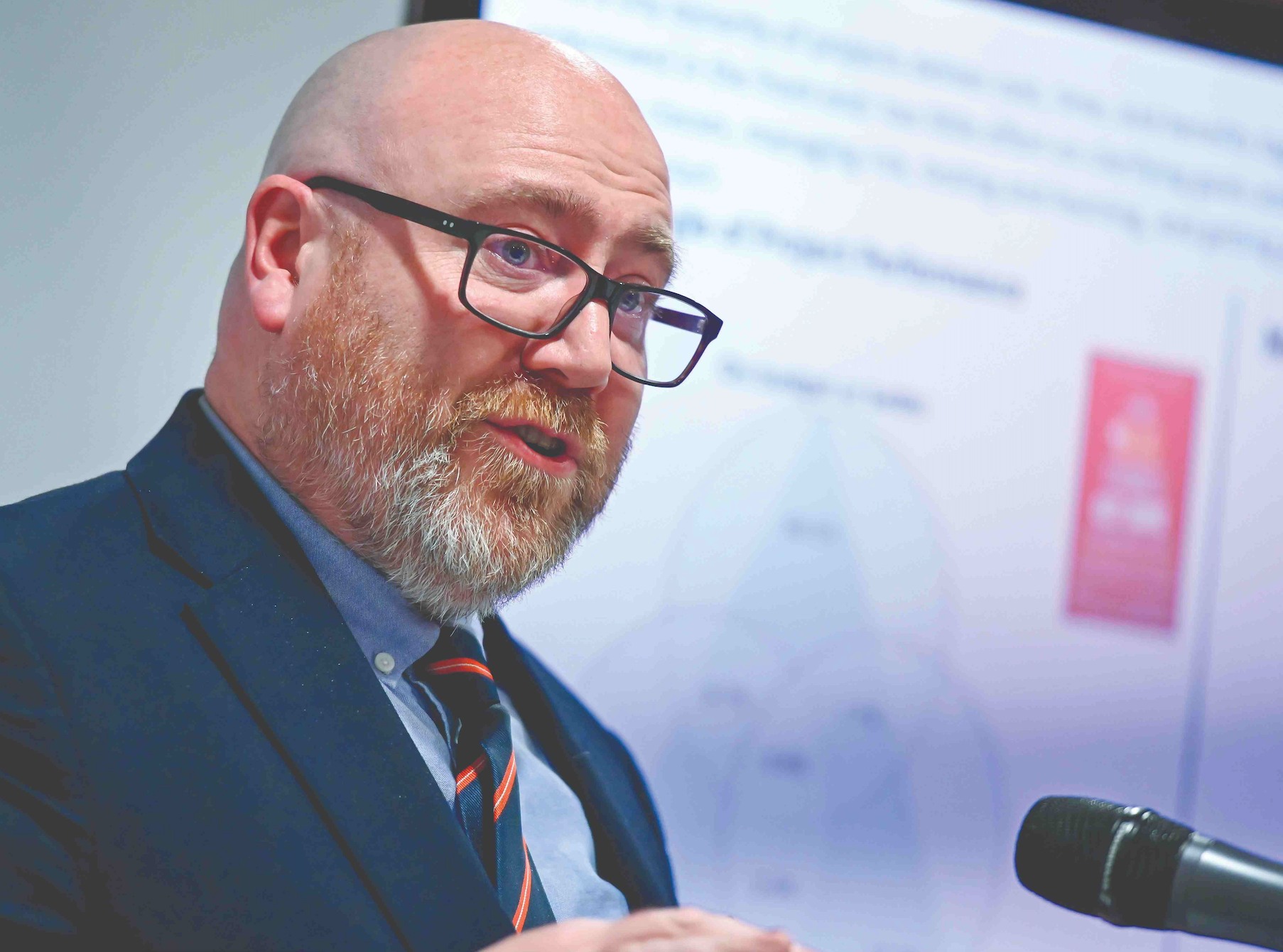 Gareth Dooley, Senior Expert at Oxford Global Projects
Tobback pointed to asymmetric financing models for cross-border lines so countries that benefit most shoulder more of the cost, and to EU-level mechanisms that reflect European instead of just national value. He also questioned why nationally focused processes still decide projects of overriding European interest, urging centrally coordinated scenarios “like our E-number highways” to guide spend where it yields the highest system value.
As the evening ended, the message was clear: the Parliament and the Council have already signaled a coordinated approach; the Commission’s package can turn it into a buildable plan. If Europe chooses collaboration over fragmentation with master-planning, clear rules and output-based targets, the payoff is lowering consumer costs, higher security and a grid ready for the clean-energy economy, and, most importantly, a big win for Europe’s Energy Union.
In partnership with
Sign up to The Parliament's weekly newsletter
Every Friday our editorial team goes behind the headlines to offer insight and analysis on the key stories driving the EU agenda. Subscribe for free here.