At the European Parliament in Brussels, Norsk Hydro convened policymakers and industry leaders to examine the Carbon Border Adjustment Mechanism (CBAM) as the EU prepares its first major review, focusing in particular on two key issues for the aluminium sector: the treatment of aluminium scrap and making sure that indirect emissions are not included in the mechanism.
MEP Pascal Arimont (EPP, Belgium), host of the event, framed CBAM as a test of delivery. The mechanism, he said, has a clear goal, but the real question is whether it works in practice. Enforcement was his starting point. “In the port of Antwerp, of all products coming from third countries, only one percent of those products are controlled,” he said, arguing that a border mechanism cannot rely on trust alone.
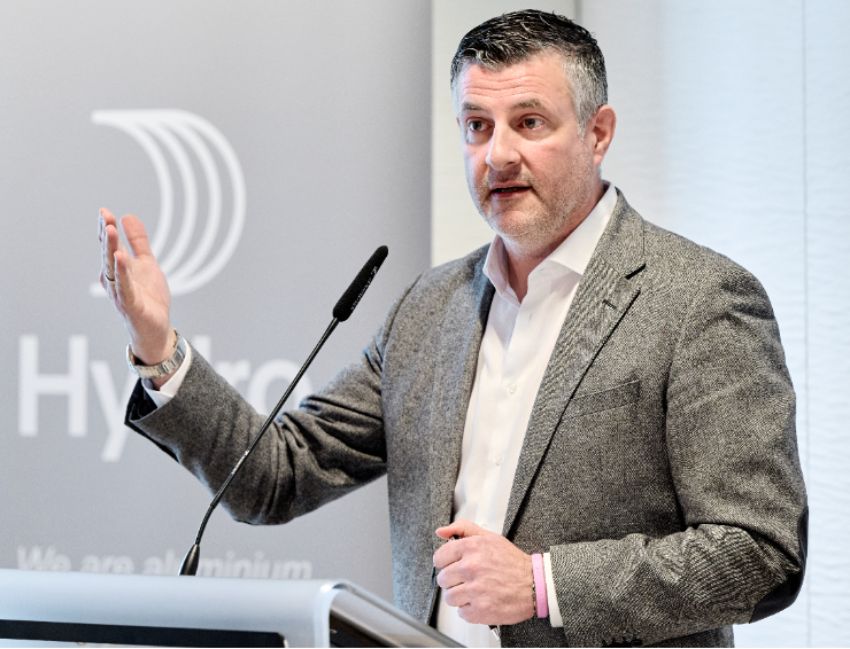 MEP Pascal Arimont (EPP, Belgium)
Arimont also stressed that the review comes at a moment when policymakers are trying to strengthen Europe’s industrial base while keeping climate policy credible. In his view, the Parliament’s role is to tighten the mechanism without ignoring how supply chains work. “We have to be smart in writing amendments and listen to what the sector is telling us,” he said.
From the European Commission, Martin Becker, Deputy Head of Unit at DG TAXUD, said the revision package aims to fix issues already visible in the transition period and make the system both simpler and harder to game. One priority, he argued, is the risk of shifting trade to products further down the value chain once basic materials are covered. The proposal therefore looks at extending scope to selected downstream products, while keeping the accountability model intact: “It’s a reversal of the burden of proof. The importer declares embedded emissions. This is then verified by an accredited verifier.”
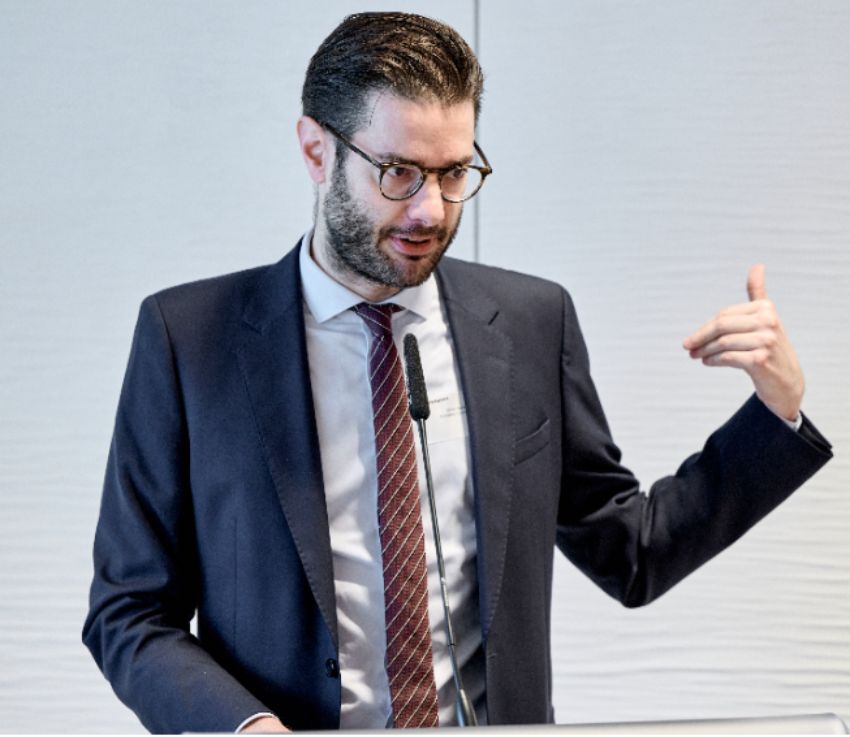 Martin Becker, Deputy Head of Unit, DG TAXUD, European Commission
He also pointed to the practical need to keep the system manageable for smaller operators. A new threshold, he said, is meant to “take very small importers out of scope and cut compliance costs”, so enforcement can focus on higher-risk flows.
For aluminium, Becker acknowledged that a key loophole is aluminium scrap. The Commission proposal covers pre-consumer aluminium scrap but not post-consumer aluminium scrap, while recognising how hard the distinction can be in practice. The Commission’s approach, he said, is to require evidence to justify claims and default to the more conservative category if proof is missing.
In the port of Antwerp, of all products coming from third countries, only one percent of those products are controlled - MEP Pascal Arimont
However, industry representatives argued that limiting CBAM coverage to pre-consumer scrap risks leaving a significant share of aluminium flows outside the mechanism. In the EU market, aluminium scrap prices are closely linked to primary aluminium prices, which already include carbon costs through the EU ETS, and -as of January this year – CBAM costs. As a result, both pre- and post-consumer aluminium scrap implicitly reflect carbon costs within the European market.
Paul Voss, Director General of European Aluminium, welcomed the momentum behind tightening the system, but urged policymakers to focus on outcomes. Aluminium’s exposure to electricity costs complicates the simple picture of direct emissions alone. “Indirect emissions are really the Achilles heel of CBAM for aluminium,” he said, warning including indirect emissions prematurely would penalise Europe’s cleanest producers while imports benefit.
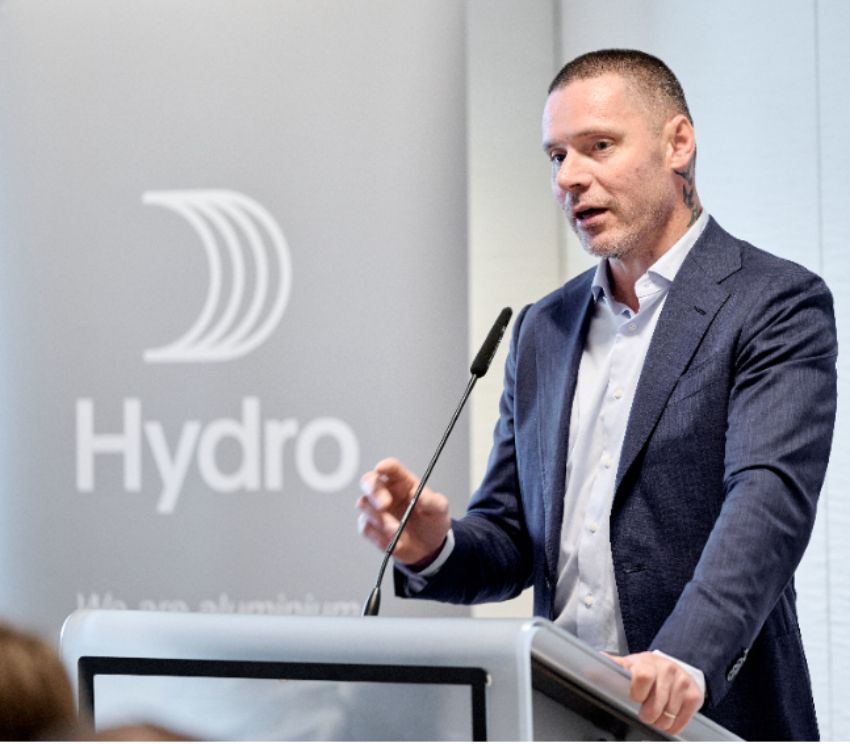 Paul Voss, Director General, European Aluminium
Eivind Kallevik, President and CEO of Norsk Hydro, framed CBAM as one pillar in the broader conditions needed to sustain low-carbon industry in Europe. Aluminium, he noted, is “essential to electrification and the clean transition”, but the climate benefit depends on where and how it is produced. “The time for action is now,” Kallevik told the room. “The simplest and fastest way of reducing emissions and meeting our climate targets is to use products made from low-carbon materials.”
Audience interventions highlighted the practical challenges and moved the conversation to the wider wave of industrial policy and product rules being developed in parallel. One participant warned that if low-carbon requirements in other files are paired with loopholes in CBAM, “Europe could end up importing higher-carbon material that is simply declared compliant”.
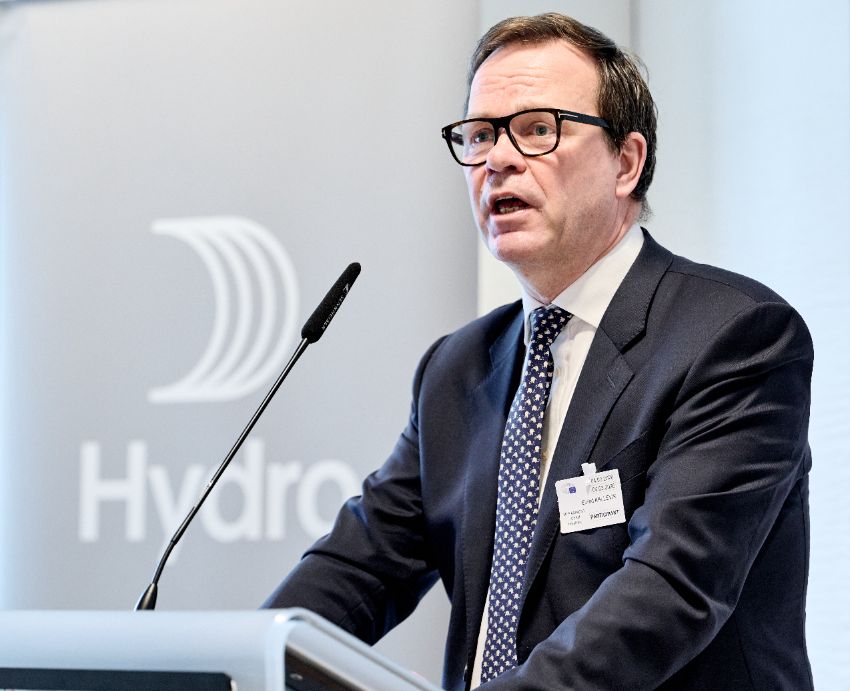 Eivind Kallevik, President & CEO, Norsk Hydro
Another intervention illustrated the scrap issue with a practical example: outside Europe, tariff regimes have reportedly been circumvented by cutting large ingots into smaller pieces and declaring them as scrap at the border. The message was simple: “if a loophole exists, it will be tested”.
Several questions focused on how quickly the EU can respond to circumvention. Participants asked what early warning signals, data-sharing and customs capacity are needed to spot anomalies and close gaps before they become business models.
The final question turned to circularity requirements in the automotive value chain. Participants asked how higher recycled-content targets could affect carbon accounting, import controls and incentives.
The simplest and fastest way of reducing emissions and meeting our climate targets is to use products made from low-carbon materials - Eivind Kallevik
Kallevik argued the aluminium story shows why low-carbon and recycled material should be treated as complementary, not competing. “European primary aluminium’s carbon intensity is more than 50 % below the global average, a competitive strength that CBAM should reinforce rather than undermine.”
He added that aluminium is “eternally recyclable” and already contains a high share of recycled content. The policy challenge, he said, is to “raise circularity while preventing fraud in scrap claims”.
On indirect emissions, Becker said the Commission did not include them in its proposal because it would prolong negotiations and delay fixes that are needed immediately to tighten the system. He argued the priority now is “to prove the mechanism works”, then adjust based on evidence in the next assessment cycle. Voss and Kallevik, cautioned against including indirect emissions in CBAM, arguing that carbon costs are already embedded in EU electricity prices through the EU ETS. Extending CBAM to indirect emissions would therefore fail to equalise carbon cost exposure between EU and non-EU producers: EU producers face a carbon cost in their electricity, even when using 100% renewable energy, whereas non-EU producers do not (and CBAM would not correct this imbalance)
The event ended with a message from Arimont arguing that a border mechanism cannot be credible if control remains limited: “How can we ensure in ports that all imported products are controlled?”. The shared conclusion was that CBAM’s purpose is set, but its execution is not. The upcoming review will therefore determine whether the mechanism can close remaining gaps, particularly on scrap and indirect emissions, while protecting Europe’s low-carbon industrial base.
In partnership with

Sign up to The Parliament's weekly newsletter
Every Friday our editorial team goes behind the headlines to offer insight and analysis on the key stories driving the EU agenda. Subscribe for free here.