VAASA, Finland — Staring out across the Kvarken Archipelago on a grey March day, the picture is one of calm. But in this picturesque corner of northern Finland, the country is quietly preparing for the possibility of war.
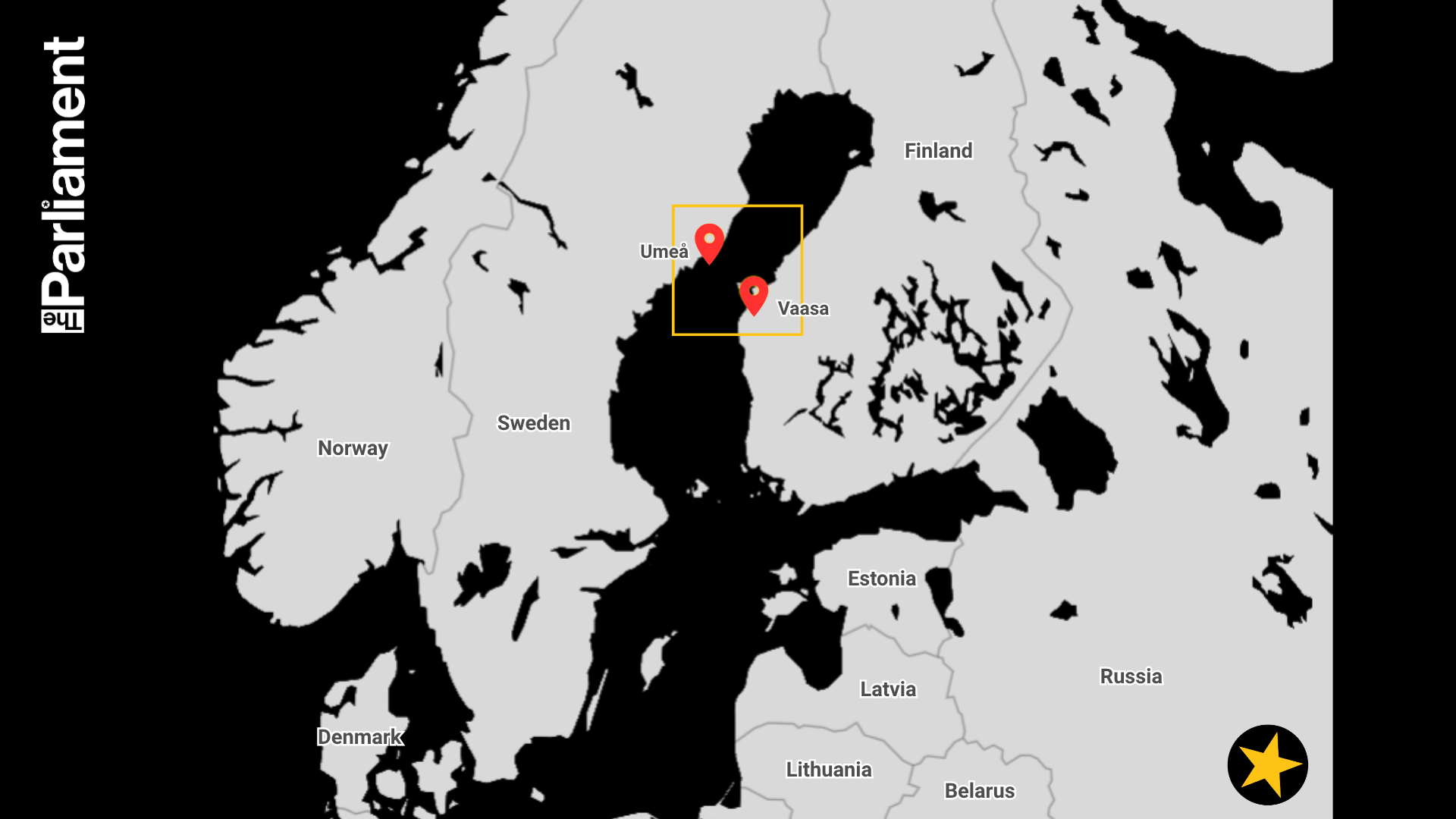
After Russia’s full-scale invasion of Ukraine in 2022, Helsinki has resurrected an idea once dismissed as far-fetched due to eye-watering costs: a fixed link across the Baltic to Sweden, its closest EU partner and NATO ally. The proposed connection between Vaasa and Umeå could cost up to €30 billion.
Supporters argue the so-called Nordic Connector would do more than boost trade and mobility across the Gulf of Bothnia. At its core, they say, the project is about resilience, ensuring Finland isn’t cut off if the Baltic Sea becomes a chokepoint in a future crisis.
“We want to build for peace, but prepare for war,” said Mathias Lindström, director of the Kvarken Council, a cross-border cooperation platform, and one of the project’s most vocal advocates.
Helsinki has reason to worry. Since late 2023, Moscow has been suspected of repeated acts of sabotage targeting vital subsea telecommunication cables as well as oil and gas pipelines in the Baltic Sea — widely attributed to Russia's "shadow fleet” of ageing, uninsured tankers used to evade sanctions. In 2024 alone, three such accidents affected Finnish assets.
Lindström warned that if sabotage in the Baltic Sea escalates, Finland and Sweden could see most of their harbors “effectively locked in.”
With Finland relying on the Baltic Sea for roughly 85% of its trade, a serious breakdown in maritime infrastructure would choke exports, disrupt imports and send shockwaves through the economy.
“It's crucial that we have alternative routes,” Lindström said.
This article is part of The Parliament's special policy report "Infrastructure for a connected Europe."
Bridging Finland and Sweden
While plans to link the two countries date back to the 1960s, “Finland considers itself more of an island than before,” explained Mikael Wigell, the CEO of the Helsinki-based Economic Security Forum and a visiting senior fellow at the Finnish Institute of International Affairs. “There is a new urgency when it comes to connecting with the rest of [Europe], especially Sweden.”
Barely a year after the start of the conflict, Finland shut down its 1,340-kilometre-long border with Russia, sending exports plummeting by about €3.1 billion between 2021 and 2023, according to the Bank of Finland.
Today, interest in the project is such that it's even part of the government’s agenda. In a first tangible win for its advocates, a study conducted by the Finnish Transport Infrastructure Agency between 2024 and 2025 concluded that the link is technically feasible.
“The geography, the shadow fleet […] every time a cable breaks, it strengthens [its] case,” said Joakim Strand, Finland’s minister for European affairs and former chairman of the Kvarken Council.
Boosted Nordic cooperation
But there is an even deeper reason driving Finland to look westward. “Increased Nordic cooperation is a response to a more disorderly, unpredictable and fragmented global system,” said Charly Salonius-Pasternak, a leading researcher at the Finnish Institute of International Affairs.
A convergence of shocks — trade and wars, supply chain disruptions and overt threats from once-trusted partners — has helped propel regional cooperation to the top of Nordic governments’ agendas, Wigell added.
For Finland, the adjustment is particularly stark. For decades, it thrived in a largely frictionless global economy: championing free trade, investing heavily in its welfare state and keeping defense spending lean. That model delivered prosperity and stability, winning Finland the prize world’s happiest country for nine consecutive years. For that reason, Finland has consistently pushed back against the EU’s drive to introduce more protectionist measures.
Then came 2022. Since the outbreak of Russia’s invasion of Ukraine at the start of that year, regional cooperation among the Nordics has accelerated. Barely a year after the conflict began, Finland and Sweden joined NATO; mere months later, they formed the Joint Nordic Air Command, creating what is now Europe’s largest air force.
Today, a link between Vaasa and Umeå wouldn’t only grant Finland an alternative export route in the event of a crisis in the country’s south but also boost overall defense preparedness in the Nordic region, argued Tomas Häyry, the long-serving mayor of Vaasa. Sweden, for instance, produces only half of the food it consumes, while Finland's self-sufficiency stands at 80%.
Häyry is hopeful that a renewed emphasis on the Nordic region will eventually shape how Finnish authorities think about European connectivity.
“The traditional strategic thinking has been to go from north to south — and not from east to west,” he said. There, he said, lies the biggest obstacle to the Nordic Interconnector.
A billion-euro bridge
But if there is sweeping agreement about the benefits linking the two countries, far fewer are willing to accept the gargantuan price tag attached.
In addition, said Salonius-Pasternak, who has first-hand experience modelling costs for large-scale projects, it would be “foolish” not to expect significant delays. To him, the budget might eventually be closer to €50-€60 billion. The most optimistic projections suggest the link could be completed within five years, while more conservative estimates say over a decade.
“Ultimately, it’s just difficult to see where that money would come from,” he said.
That question takes on even greater relevance against the backdrop of Finland's economic situation. Over the past few years, the Nordic country — historically a model of fiscal discipline — has struggled to rein in its soaring public debt.
To stabilize the deficit, authorities in Helsinki are weighing a raft of painful options, including cuts to social benefits. Finland’s public debt topped 89% of gross domestic product in 2025. To compare, Sweden’s was a mere 31% in 2024, while France, often labeled a major offender of fiscal discipline, reached 115% in the same year.
Proponents of the bridge, however, argue it will come down to “political courage.” Yet even they concede that the burden cannot rest on public coffers alone, noting that several private companies have already signaled their interest.
Strand is convinced any funding will have to be a “puzzle that is open to both public and private investors.”
Advocates also underscore that a fixed link between Vaasa and Umeå would strengthen European security as a whole.
Finnish officials know that message will be key to unlock EU funding, something that would make the project more viable.
Already, a €70 million loan from the European Investment Bank has helped finance the ferry currently linking the two shores.
"I hope and believe that the European Union could and should have a role when it comes also to funding,” said Strand.
Sign up to The Parliament's weekly newsletter
Every Friday our editorial team goes behind the headlines to offer insight and analysis on the key stories driving the EU agenda. Subscribe for free here.