Next to the Kazakh Embassy in Brussel’s Uccle neighborhood stands a symbol of Astana’s diplomatic ambitions: a traditional Kazakh yurt.
“It was shipped to Brussels in two stages — the first batch with our national football team in September 2025, and the second smaller batch in March 2026 by regular cargo service,” said Roman Vassilenko, Kazakhstan’s former deputy foreign minister and now ambassador to Belgium and Luxembourg. Since then, it has hosted ministers, envoys, CEOs and top-level officials.
More than an architectural curiosity, the yurt reflects Kazakhstan’s broader charm offensive toward the European Union, its largest trading partner and foreign investor. So far, the strategy appears to be paying off.
Last week, President Kassym-Jomart Tokayev descended on Brussels for an official visit that culminated in a bumper package of 30 commercial deals worth around €10 billion.
“Kazakhstan is a global gateway, and so is Central Asia,” said Commission President Ursula Von der Leyen in a statement, suggesting Tokayev’s visit was proof that relations were “growing.” The high-level meeting followed last year's first-of-its-kind summit between European and Central Asian leaders.
The largest former Soviet country after Russia, Kazakhstan has maintained diplomatic relations with the EU since gaining independence in 1991. In 2015, Astana became the first Central Asian country to sign an Enhanced Partnership and Cooperation Agreement (EPCA) with the EU, paving the way for closer cooperation on trade, energy, and investment, alongside other areas.
To Vassilenko, Russia's full-scale invasion of Ukraine in 2022 accelerated those efforts.
The start of the war “changed the nature of the political dialogue between the EU and Kazakhstan and other countries in Central Asia,” he said. Central Asian nations declined to recognize Russia’s annexed Ukrainian territories and kept advocating for resolving the conflict in line with the United Nations Charter, which refers to “sovereignty, territorial integrity and the peaceful settlement of disputes.”
“This is a political message that was very well understood in Brussels,” he added.
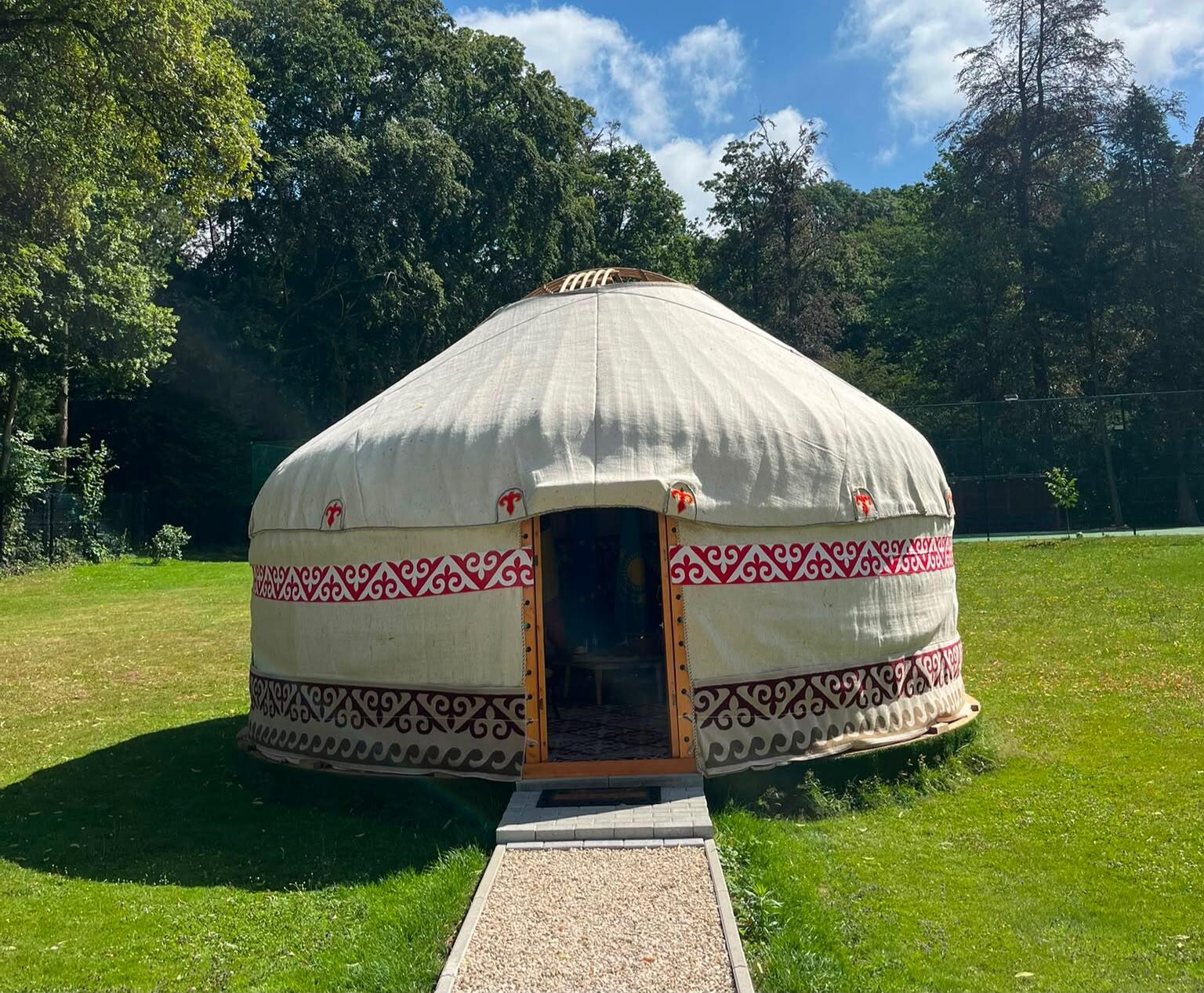 The Kazakh Embassy's yurt in Uccle, Brussels. (Federica Di Sario)
Kazakhstan's pitch to Europe
Kazakhstan increasingly fits the profile as Brussels' ideal partner: rich in oil reserves as well as critical minerals and strategically positioned to offer a route to China that bypasses Russia.
Last week, Tokayev pitched Kazakhstan as a supplier of 21 of the EU’s 34 designated critical raw materials through an offtake cooperation model that would secure long-term supplies for Europe’s metal-intensive industries.
The proposal comes as European governments struggled to develop their own CRM production and ambitions to secure supplies abroad have been curtailed by China’s dominance, especially in Africa. Adding to the pressure, the EU last year briefly turned into collateral damage in a tit-for-tat trade war between the U.S. and China.
Astana’s growing role in Europe’s critical materials strategy was also underscored by plans to build an internationally accredited laboratory focused on critical metals. The European Bank for Reconstruction and Development is currently conducting a feasibility study.
In exchange, though, Kazakhstan hopes to secure “investment and technologies,” Vassilenko said.
Then there’s the connectivity agenda. As the EU weigh options to revive the ancient Silk Road through its Global Gateway initiative, launched in 2021, Kazakhstan will be central to the completion of the Trans-Caspian Transport Corridor, also known as Middle Corridor, which links Europe with China and the broader East Asia.
Vassilenko said the East-West corridor could become a “great connector between Asia and Europe in the 21st century.”
“With the upheaval that we have observed in the Strait of Hormuz [and] the Malacca Straits in Singapore being clogged, there is obviously a need to have a reliable and quick transportation network that can bring cargo from Asia to Europe and backwards across Central Asia,” he said.
He added that cargo volumes have risen from 800,000 to 4.1 million tonnes per year since 2021, and that Astana aims to reach a capacity of 10 million tonnes by 2030.
Lastly, Astana is eager to see the long-discussed visa facilitation with the EU finally come into force. The new rules should make it easier for the roughly 150,000 Kazakhs who travel to Europe each year to obtain a Schengen Visa, Vassilenko said. EU citizens, meanwhile, have been able to visit Kazakhstan visa-free for up to one month since 2017.
Sign up to The Parliament's weekly newsletter
Every Friday our editorial team goes behind the headlines to offer insight and analysis on the key stories driving the EU agenda. Subscribe for free here.