Ten years after the Paris Agreement, COP30 was held in Belém, Brazil, in a high-stakes context, against a backdrop of trade frictions, tighter finance and multiple wars.
The Parliament Magazine gathered policymakers and stakeholders on Tuesday 9 December for post-COP30 debrief with MEP Lídia Pereira (Portugal, EPP), who led the European Parliament’s delegation, to frankly explore what Belém delivered, what fell short, and—critically—what must happen before COP31.
Our reporter Federica Di Sario, moderator of the discussion, handed the floor to Pereira, who did not sugar-coat the outcome; the Parliament’s mandate had been clear: more ambition on mitigation, a concrete fossil-fuel phase-out roadmap, and stronger financial responsibility from major emitters. “It’s not the best outcome,” she said, “but it was the only possible outcome.” Even so, she stressed, Europe should recognise a “victory of multilateralism” and stay the course, noting that decarbonisation is not just a matter of environmental policy, but also Europe’s path to prosperity.
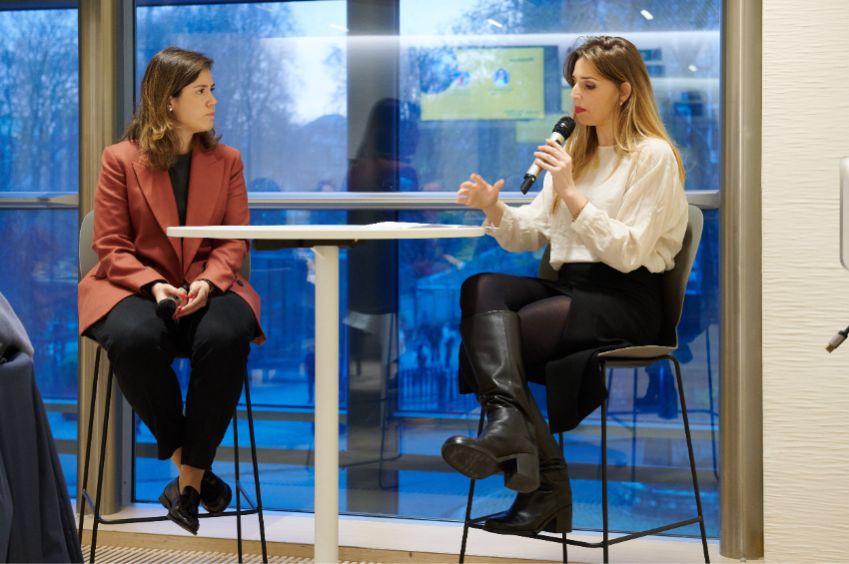 MEP Lídia Pereira warned that Europe must pair ambition with clarity by measuring what is delivered and communicating where climate money goes
That framing, “delivery over declarations”, ran through the subsequent conversation. Pereira described a “negative coalition” among some producer countries that complicated Brazil’s presidency, and the visible absence of the United States in the negotiations. The lesson for Europe, she argued, is to arrive at COP31, which will be held in Antalya, Turkey, with Australia leading the negotiations, with pre-built alliances, so it can meet negative coalitions from a position of strength, and positions prepared, rather than scramble in the final weeks.
Asked how others now view the EU, Pereira stated that Europe remains the “reference” because it shows up with concrete homework done—law, targets, and instruments—even if some partners criticised EU measures they miscast as trade tools rather than climate policy. Diplomacy matters, she added, as taking the 2040 climate target, a 90% net greenhouse gas reduction, to Belém helped clarify Europe’s direction of travel and calm doubts around its ability to speak with one voice, in reference to the late common position taken by Member States, which threatened to weaken the European position ahead of the negotiations.
Adaptation emerged as one of COP30’s clearest advances and political necessity. With extreme weather intensifying, Pereira welcomed the shift to financial adaptation, paired with greater involvement from multilateral development banks, to create investable products where private appetites are thin. The point, she stressed, is practical resilience: early-warning systems, resilient public infrastructure and faster recovery when disasters hit.
Grids, rules and procurement need to make clean investment cheaper and faster if Europe wants both climate and security wins
Yet implementation will falter without public consent. Pereira warned that Europe must pair ambition with clarity by measuring what is delivered and communicating where climate money goes. Transparency on results sustains support; complexity without visible outcomes does not. To make that transparency real, the reporting and compliance rules must be workable for businesses, otherwise “measurement” becomes costly box-ticking that erodes trust. That means simplifying where necessary while protecting overall ambition: “We cannot put the burden entirely on companies. We need companies on board.”
Audience members urged Europe to work harder to make future COPs attractive to countries drifting away by putting concrete economic and security wins on the table: cheaper clean power for households and industry and support to scale green steel, as defence. Pereira agreed that linking its positive achievements to its green ambitions would help Europe build broader coalitions and gain from the public and noted that climate security should have been a core theme in Belém.
The discussion then turned to Europe’s economic and security lenses. Pereira insisted that “decarbonisation and competitiveness are inseparable”: Europe must cut energy costs, integrate its energy markets, and remove internal-market bottlenecks that slow clean-tech deployment.
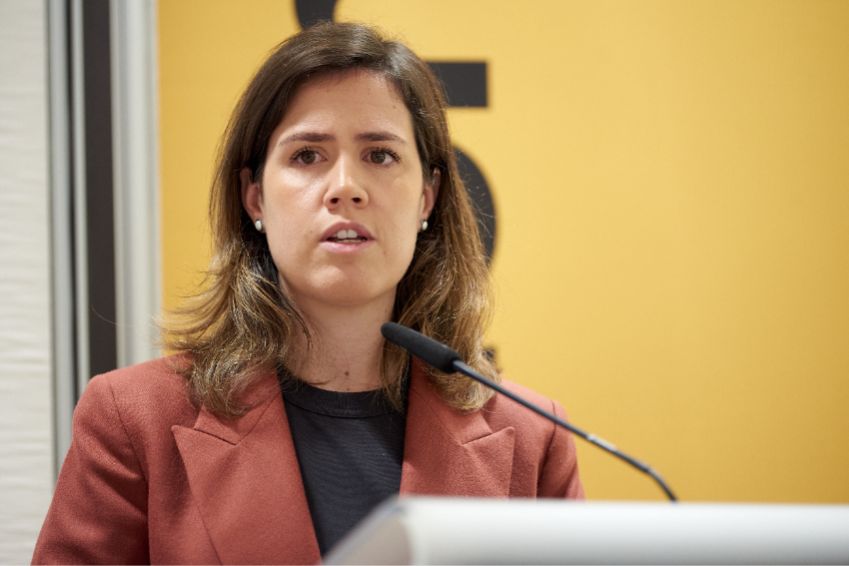 MEP Lídia Pereira stated that Europe remains the reference because it shows up with law, targets, and instruments
She argued Europe’s internal-market barriers must be cleared and energy costs must be cut through deeper market integration, which would pair rearmament with decarbonisation so “fighter jets and tanks are not dependent on fuels Europe doesn’t control”. Grids, rules and procurement need to make clean investment cheaper and faster if Europe wants both climate and security wins.
Greta Drumstaité, Head of Policy and Advocacy at Raízen, a Brazilian company leading innovation in sustainable biofuels, asked to clarify Europe’s view on Brazil’s Sustainable Fuels Pledge, one of this COP’s most significant initiatives, which aims at quadrupling the global production and use of sustainable fuels by 2035. Pereira backed scaling sustainable fuels alongside electrification, stressing the need for stable rules and credible pipelines for Europe to scale-up, and noting markets are already pointing the way; she framed investment in alternative fuels and technologies as “essential to accelerate decarbonisation”.
Threading the morning’s themes, Pereira closed the discussion by offering a straight list of imperatives. First, move from vision to execution: sequence projects realistically, standardise where possible, and use credible measurement so citizens and partners can see delivery. Second, mainstream adaptation with clear, bankable financing pathways, because resilience is now a core public good. Third, align climate and competitiveness by fixing Europe’s internal-market friction, especially in energy, so clean technologies can scale faster at lower cost.
The lesson for Europe is to arrive at COP31 with pre-built alliances, so it can meet negative coalitions from a position of strength rather than scramble in the final weeks
She also called for diplomatic groundwork by building coalitions beyond familiar alignments and engaging large emerging players early and often. Europe cannot carry the transition alone, but it can hold the line on rules, transparency and measurable progress while leading by example and inviting others into a credible delivery club.
The event’s opening question lingered: how far will countries go, and how fast? Europe’s answer will be judged less by what it promises at COP31, and more by what it delivers between now and then—on the ground, on time, and in full.
Sign up to The Parliament's weekly newsletter
Every Friday our editorial team goes behind the headlines to offer insight and analysis on the key stories driving the EU agenda. Subscribe for free here.